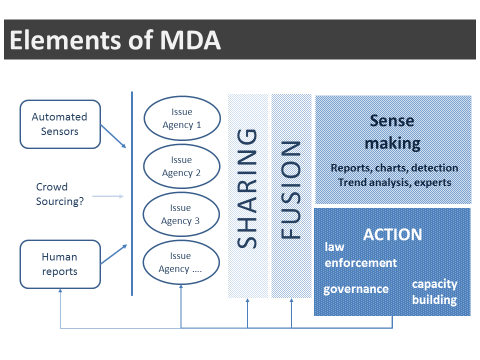
 In May we held an ideaslab on the prospects and perils of Maritime Domain Awareness in Cardiff. The report of the event is now online at piracy-studies.org. In the report, co-authored with Amaha Senu, we discuss some of the core challenges that MDA is facing.
Category Archives: News
Linking History and Theory in International Relations
What is the link between the history and theory of international relations? Is the a growing gap between the two ways of reasoning about international relations? Can theory survive without history, and vice versa? These were the questions of a two day workshops held at Cardiff on the 29th of June and 1st of July. Organized by Campbell Craig the workshop brought together 15 scholars from the UK and the US reflecting different positions and disciplinary backgrounds.
New maritime security research project launched in Portugal
The Portugese Institute of Higher Military Studies (Instituto Universitário Militar) launched a new research project on maritime security on the 30th of June. The project is based in the Departamento de Estudos Pós-Graduados (Área de Ensino Específica de Marinha) and led by João Carlos Lourenço da Piedade. I had the honour to address the launching workshop. In my talk I was arguing that the rise of maritime security is inducive of a major shift in the governance of the sea. The rise of maritime security strategies, the recognition of non-state maritime threats, the importance of the blue economy agenda and the relative failure of existing ocean governance institutions to address these, point out that the immediate post-cold war maritime order is transforming substantially. I concluded in speculating about some of the contours of the new maritime security order, highlighting in particular the role of informality as well as technology.

BISA conference in Edinburgh
 The 2016 conference of the British International Studies Association takes place in Edinburgh. I am attending from the 15th to the 17th and will act as a chair on a peacebuilding panel and give two presentations, one on the case of the high risk area controversy, and the other one on a roundtable on the future of the sociology of the discipline of International Relations. I look forward to catch up with colleagues from the UK and elsewhere.
Visiting Brussels
From the 12th to the 14th of June I am scheduled for Brussels. On the agenda is first a briefing at NATO HQ on the upcoming NATO Summit. I am in particular interested how NATO will continue its maritime security work. 2016 is a transformative year, it is expected that NATO’s Operation Ocean Shields will end this year, there is a growing discussion of what NATO’s role could be in tackling the human trafficking problem in the Mediterranean and how such work could be linked to Operation Active Endeavour, and the opreationalization of the Alliance Maritime Strategy still lack progress. On the second day I am acting as reviewer for an European Commission funded FP7 project. The project titled IPATCH intends to develop early detection mechanisms for piracy and as such might assist in strengthening maritime domain awareness.
Bridging the Gap
 From June 5th to the 9th I will participate in the International Policy Summer Institute (IPSI) of the Bridging the Gap Project. Held in Washington the program intends to explore ways of how to better connect research and policy in the field of international affairs.
CGPCS Plenary Meeting in the Seychelles
 The Contact Group on Piracy off the Coast of Somalia – the global governance body which I have been studying closely in my ESRC funded Counter-Piracy Governance project – is soon to hold its next plenary meeting. Organized by the current chairmen, the Government of Seychelles, the four day meeting will be held in the Seychelles from the 29th to the 3rd of June. I will be participating as an observer, but also give two presentations during the meeting. In the first presentation I will provide an update of the lessons learned work I have been doing for the group, and in the second discuss the future of the group on the basis of a recent paper. I will report on the event on the website of the group which is available here.
Participants in the Maritime Domain Awareness Ideaslab
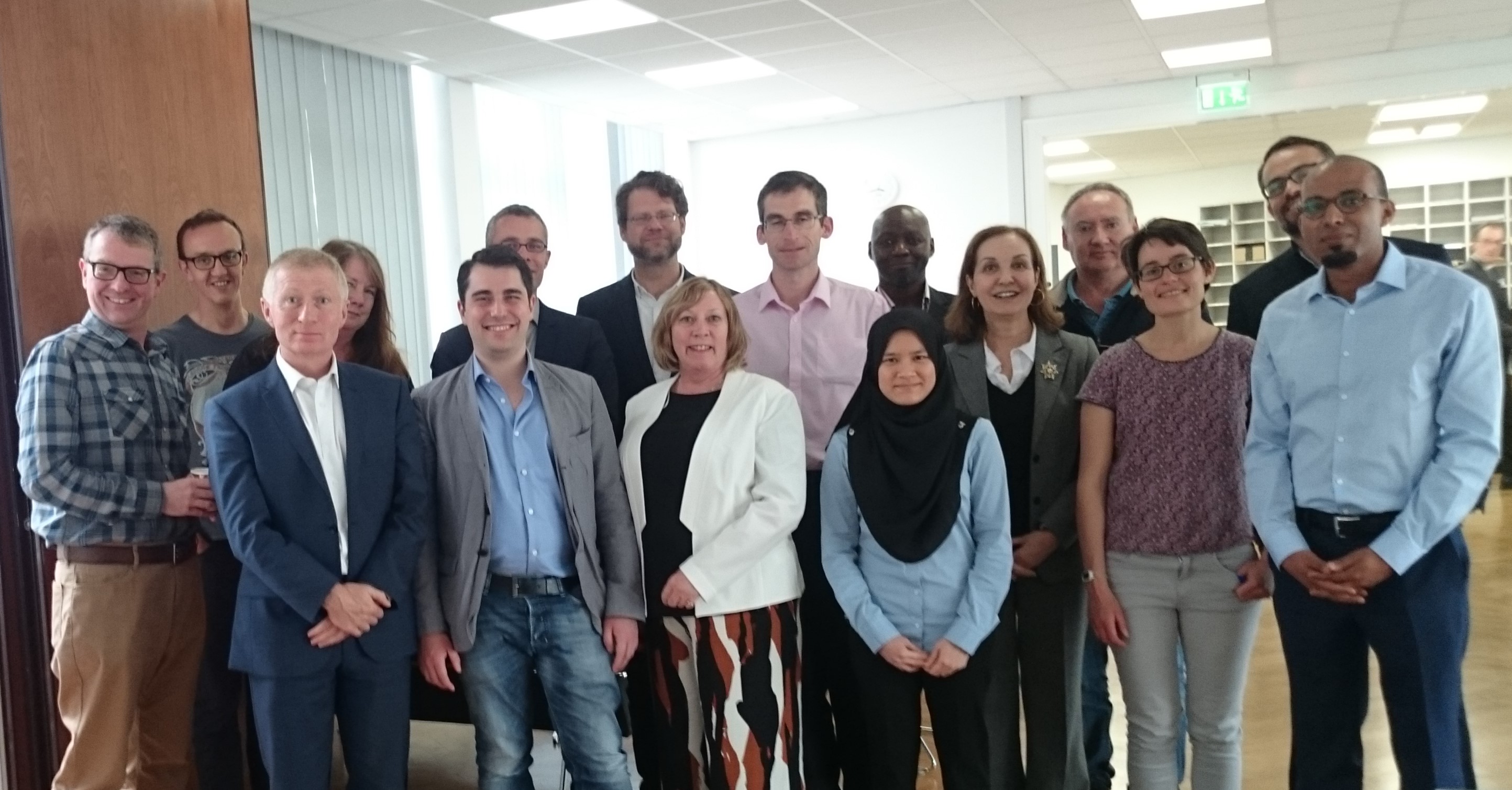
Participants in the Maritime Domain Awareness Ideaslab
Workshop on Practices in Edinburgh
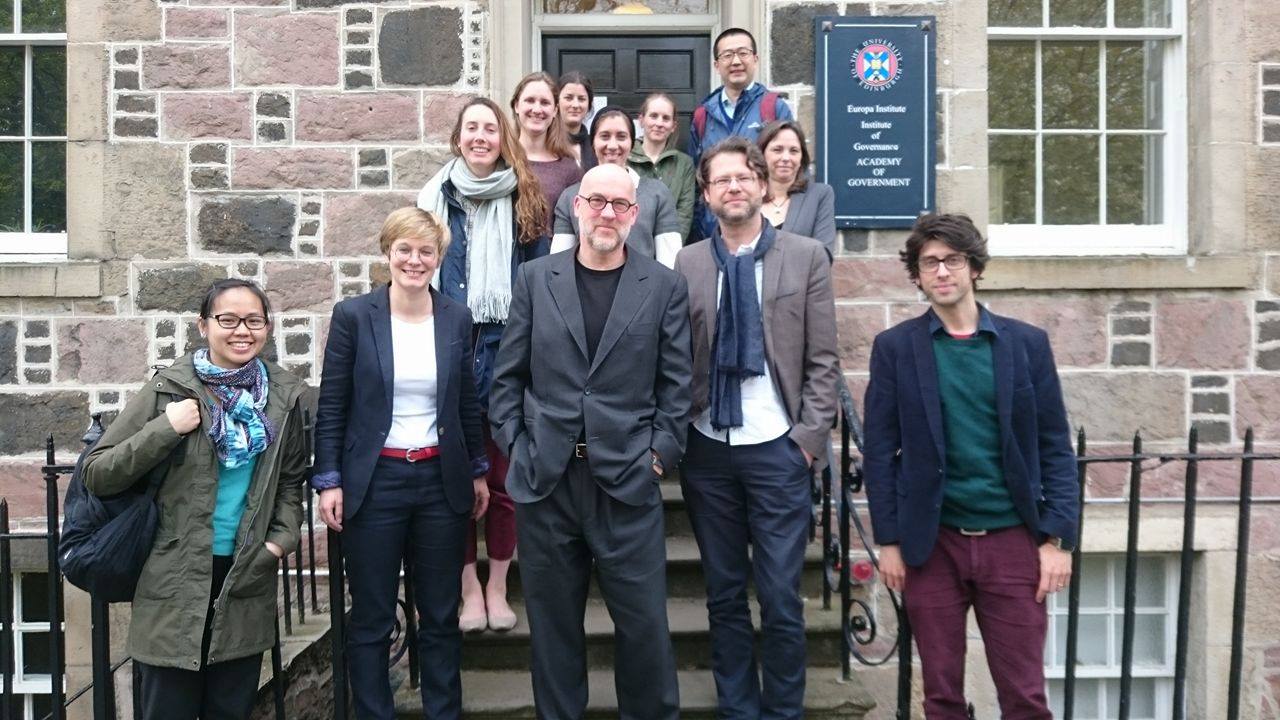 “Politics on a Human Scale: Approaches to Practice in Policy, Politics and IR” was the title of a workshop jointly organized between the University of Edinburgh’s Centre for Security Research, its Academy of Government and Cardiff University’s Department of Politics and International Relations. The workshop, held on the 6th of May, focussed on ongoing research projects which aim at zooming in on activities and practices of politics. The workshop discussions centred around different approaches to practice in our research with a view to rethink the theory-methods package in studies of practice. What are the implications of drawing on certain concepts for methodology and research practices? How do we relate research practices to attempts of generalising and abstracting? The workshop was a very productive environment to address these questions. From Cardiff, Alena Drieschova, Hannah Hughes and myself participated in the event.
I gave talk on my ongoing counter-piracy governance project, particularly developing the methodological reasoning. I discussed what we might learn from alchemism and their interest in the occult and experimentation. Arguing that alchemism revolves around three core concepts – expertise, experiment, experience – I outlined how these can organize a research process and our thinking about it.
Given the shared research interest of both universities in the field of practice research, but also areas of research such as devolution, we intend to institutionalize Cardiff-Edinburgh research meetings in the future.
Whatever happened to the Somali Pirates? Talk @ Edinburgh
On May, the 5th, I will be giving a talk at the Centre for Security Research at the University of Edinburgh. In the talk I revisit the rise and fall of Somali piracy. The first part investigates how we can explain the emergence of piracy, by paying attention to structural and agency oriented arguments, as well as the known set of factors that trigger piracy. The second part investigates the building blocks of counter-piracy and why these were so successful. I pay particular attend to legal and military coordination and the role of the Contact Group on Piracy off the Coast of Somalia in steering the development of these processes. I end with an outline of what the policy consequences of this story are, and what the broader lessons for the debates in global security governance. Further info on the talk is available here.