Category Archives: In the News
Media roundup – situation in Strait of Hormuz
Transit through one of the global economy’s most central water way – the Strait of Hormuz – continues to be limited. Since the war started on 28th of February, only few ships have gone through the Strait. These were either directly linked to Iran, or countries negotiated individual passages with the government. The economic impact has been globally felt and the crisis effects small island states and least developed countries in the most dramatic way.
Over the past days, I have spoken to different media to help publics to understand better why it is difficult to return to normal traffic in the Strait. The strait cannot just be opened but require a multi-stage process. Diplomatic solutions are key to develop a governance arrangement that can provide some level of physical protection for shipping and reassurance. A UN mandate would be crucial to ensure impartiality and legitimacy. Highlights include conversations with Neue Zürcher Zeitung, Wall Street Journal, and France24. See the full overview here.
How can maritime flows return in the Strait of Hormuz? New commentary
The Strait of Hormuz is vital for the global economy, the longer it stays closed the higher the risks. Yet, returning to normal will be difficult.
In my most recent commentary, published with Global Observatory, I look at mid-term scenarios. A UN Security Council mandate, or even a maritime UN Peacekeeping mission, could be key. Leadership from the EU will be needed.
Options for re-opening the Strait of Hormuz
Continuing the discussion on the Strait of Hormuz, I spoke to CNBC about the importance of the Strait and the options for re-opening it. Military solutions will be limited, and diplomatic negotiations are urgent, which include the shipping industry.
Discussing Strait of Hormuz with Al Jazeera
The EU’s new naval mission – Monocle radio
In an episode of Monocle Radio’s The Briefing I discuss how the new mission Aspides by the EU is organized and why it matters. Listen to it here.
Writing retreat and field work in Mauritius
Over the last ten days I was with the team of the Ocean Infrastructure Research Group in Mauritius. Together we advanced the draft of our forthcoming book on ocean infrastructure and conducted field work on the 2020 Wakashio oil spill, which is one of our case studies.
In the book we develop a new understanding of global ocean politics by developing a framework centered on infrastructure. We argue that the concept of infrastructure opens productive new avenues for understanding global ocean politics that allows us to overcome the limits of thinking centered on territory, freedom or global commons. We show the evolution of the oceans as an infrastructural space, and show how we can rethink power, law, security and knowledge infrastructurally.
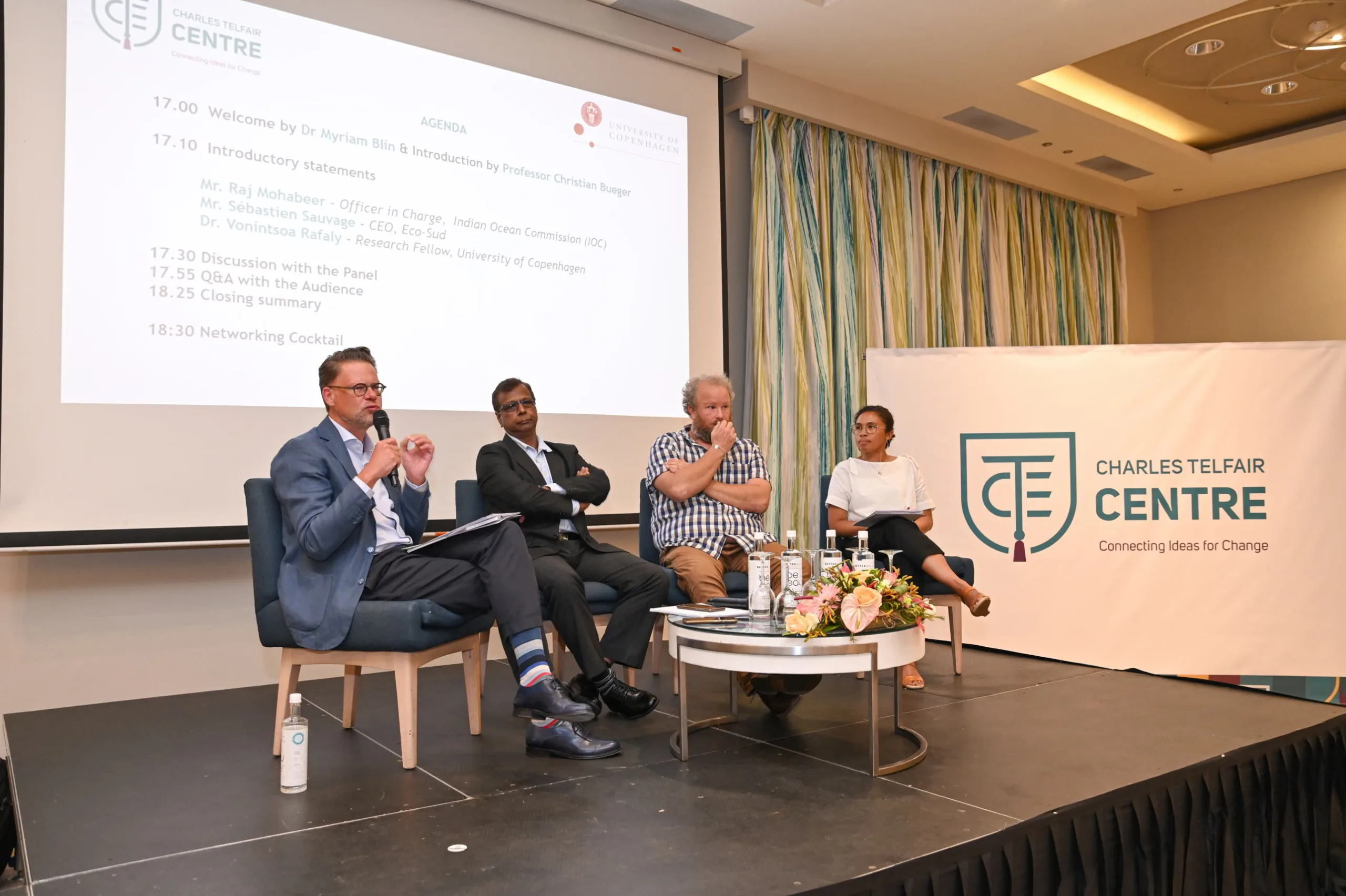
Fieldwork on shipping risks in small islands
Part of our stay in Mauritius was also a stakeholder workshop and a public event on shipping risks and the lessons from the 2020 Wakashio shipping accident which caused a major environmental disaster in the country. The event was covered in the national newspapers, and we also met with a range of stakeholders individually, including the minister on blue economy, fishing and shipping.
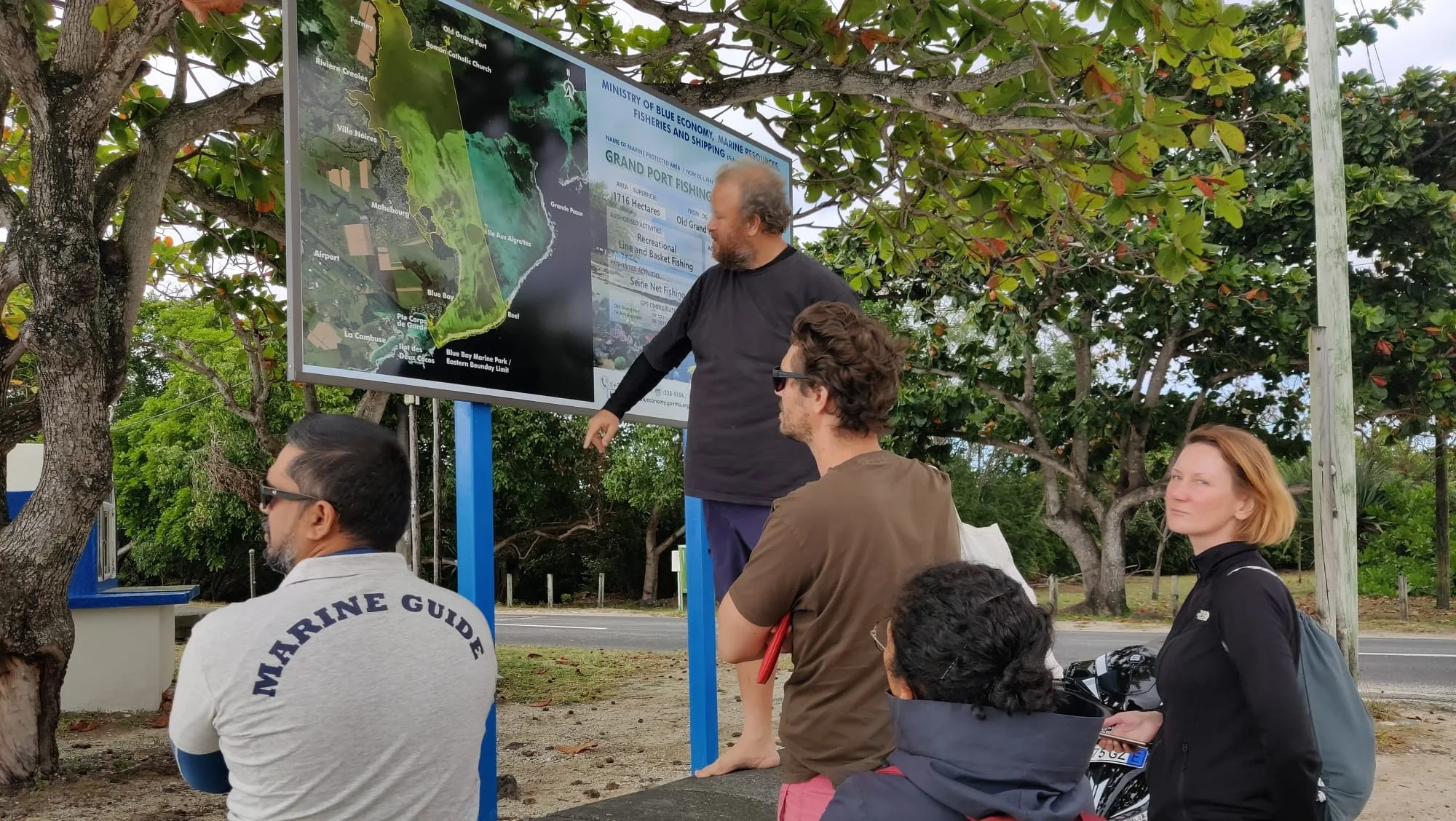
A particular important experience was a field visit to the site where the accident happened and the coastal region where the oil was spilled. The visit was organized by the local NGO EcoSud. It revealed that the clean up is completed, but that the disaster has some visible and lasting impact on the coastal eco-system, and there continues to be residues of oil in the mangrove forests. In other words, the disaster is not over, but will have to be managed carefully in the years to come.
New commentary on Russia’s spying activities in the North Sea
In a new commentary published in The Conversation I reflect on the recent reports of Russian spying activities in the North Sea and Baltic Sea region. While there are not many news in these reports, I argue that it implies to pay more attention to the North Sea as a critical security space, and to go beyond surveillance and invest in repair capacities to reduce the threat to infrastructures. Read the commentary here.
Consequences of the Nord Stream sabotage
The sabotage of the Nord Stream pipelines has drawn unprecedented attention to the under water domain and the criticality of subsea infrastructures. Indeed, the world economy depends on the ocean floor as never before in history. It is pipelines, electricity cables, and data cables, that connect the global economy.
Drawing on the research conducted as part of our ocean infrastructure research group, in particular our work on subsea data cables, I have been commenting in several news outlets on this issue, including the Wall Street Journal, Der Spiegel, and others. See the overview here.
An independent commentary on the consequences for the EU was published by The Conversation. A commentary co-authored with Tobias Liebetrau published in The Loop argues that we have to change our perspective of the under water space more generally.
The European Parliament discussed our report on October 6th and announced that our recommendations will inform an action plan on the protection of underwater infrastructures. In response, I published a commentary in EUObserver arguing that the action plan of the commission is not sufficient.
New commentary on India’s role in collective maritime security
As more and more geopolitical attention turns to the Western Indian Ocean, in a new commentary I explore the role of India in collective maritime security. I argue that India should continue on the course it charted last year in the UN Security Council: to work towards collective multilateral maritime security mechanisms on a regional and global level.