Christian Bueger


Maritime security in Southeast Asia: Celebrating the 20th anniversary of ReCAAP

Southeast Asia has long been a region of maritime security innovation. A key driver was the maritime piracy crisis in the late 2000s.

A key regional governance mechanism originating from that time is the Regional Cooperation Agreement on Combating Piracy and Armed Robbery against Ships in Asia (ReCAAP) and its associated Information Sharing Centre (ISC). ReCAAP is one of the few legally binding and well institutionalized regional maritime security frameworks that has served as a role model for arrangements such as the Djibouti Code of Conduct in the Western Indian Ocean and the Yaoundé Code of Conduct in the Gulf of Guinea.
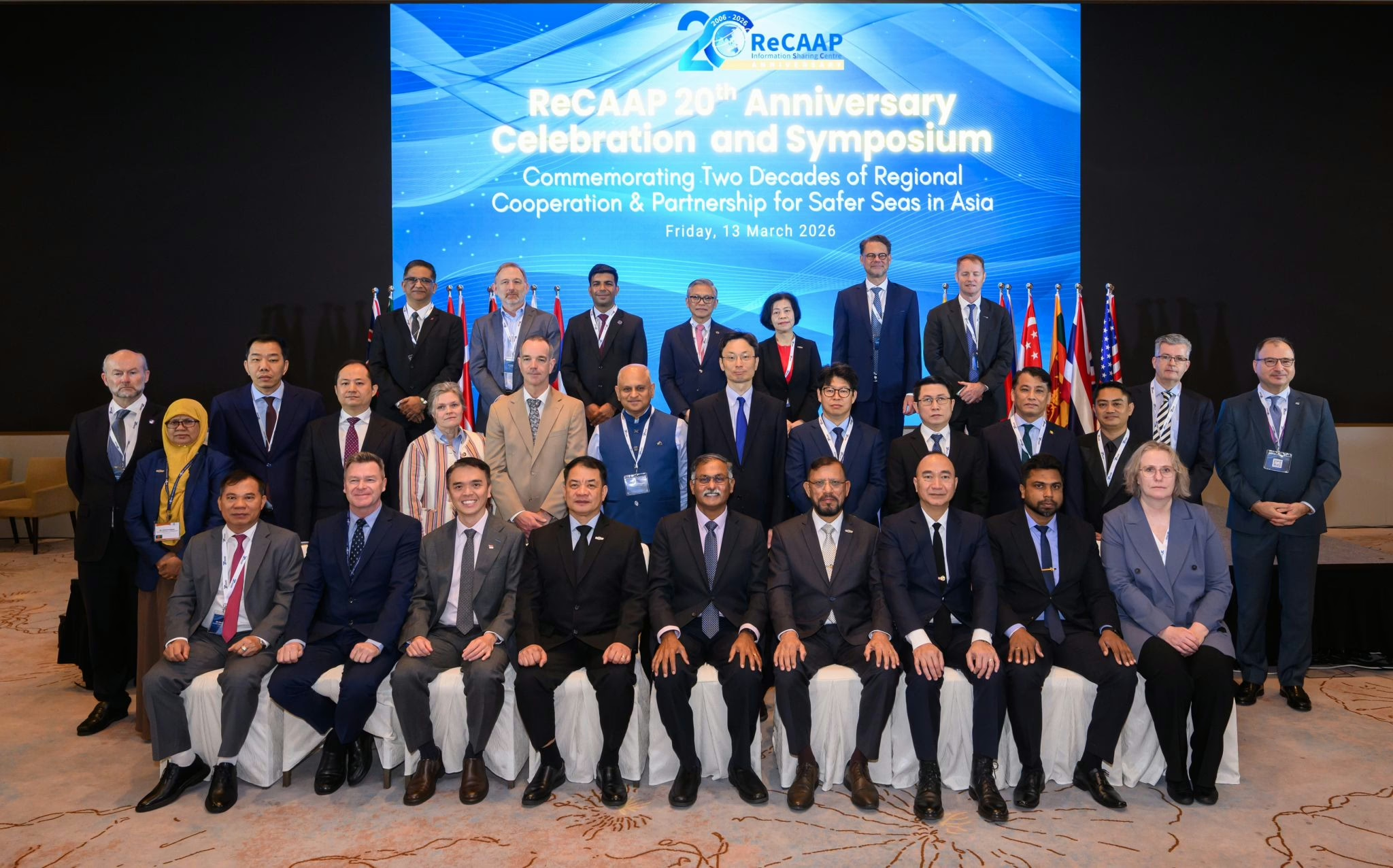
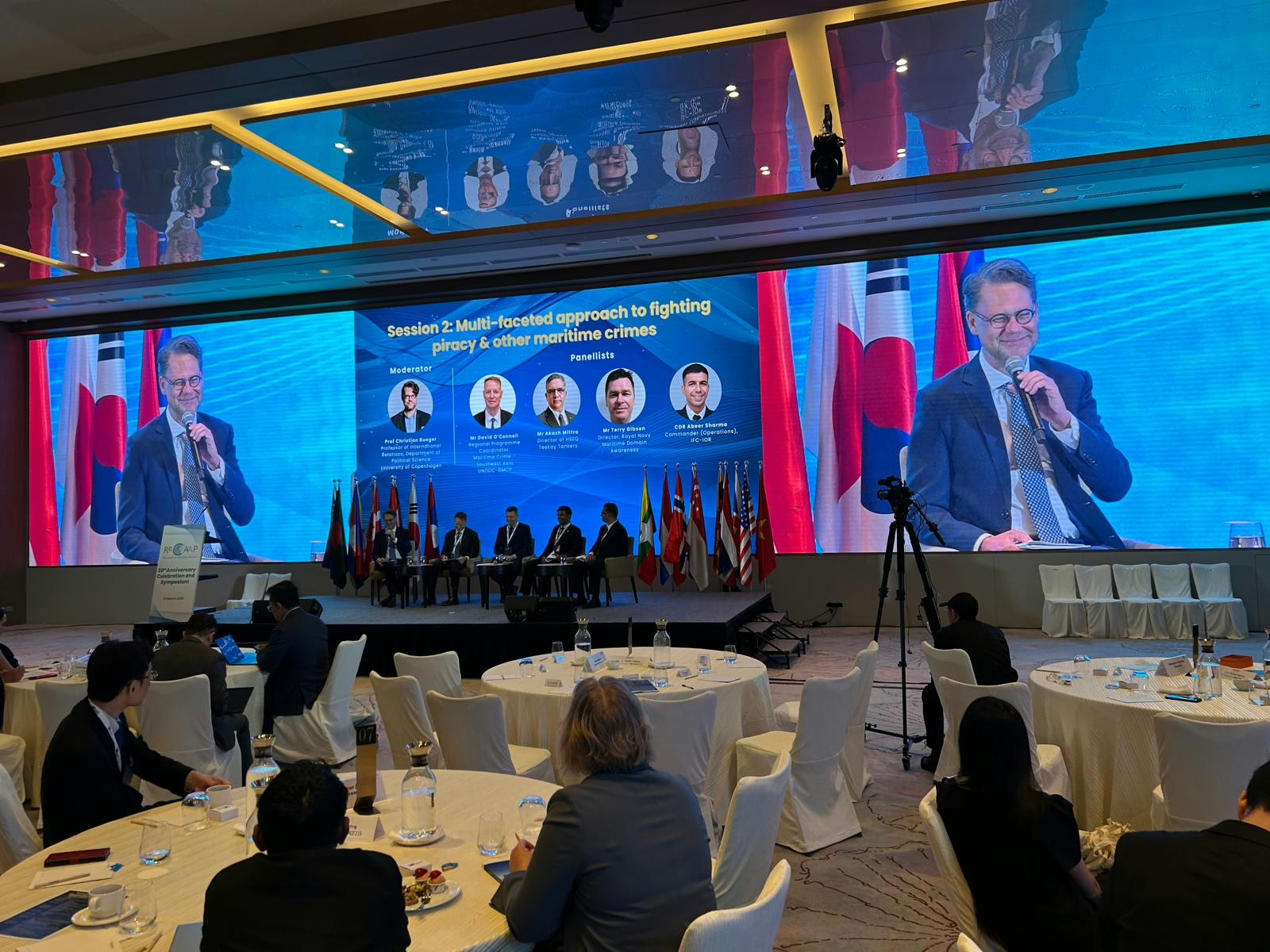
On Friday, 13.3., I had the pleasure to participate in the symposium celebrating the 20th anniversary of ReCAAP as a panel moderator. This provided a great opportunity to revisit a comprehensive study on maritime domain awareness in Southeast Asia that I conducted in 2015. Most of the observations continue to be valid:

ReCAAP’s main function is to provide a clearing house for piracy-related information and to analyze available incident data. It’s key strength is to ensure high level of awareness and understanding of piracy in the region, even if threat levels are low. The centre’s work is moreover important in capacity building and the exchange of lessons across global ocean regions.
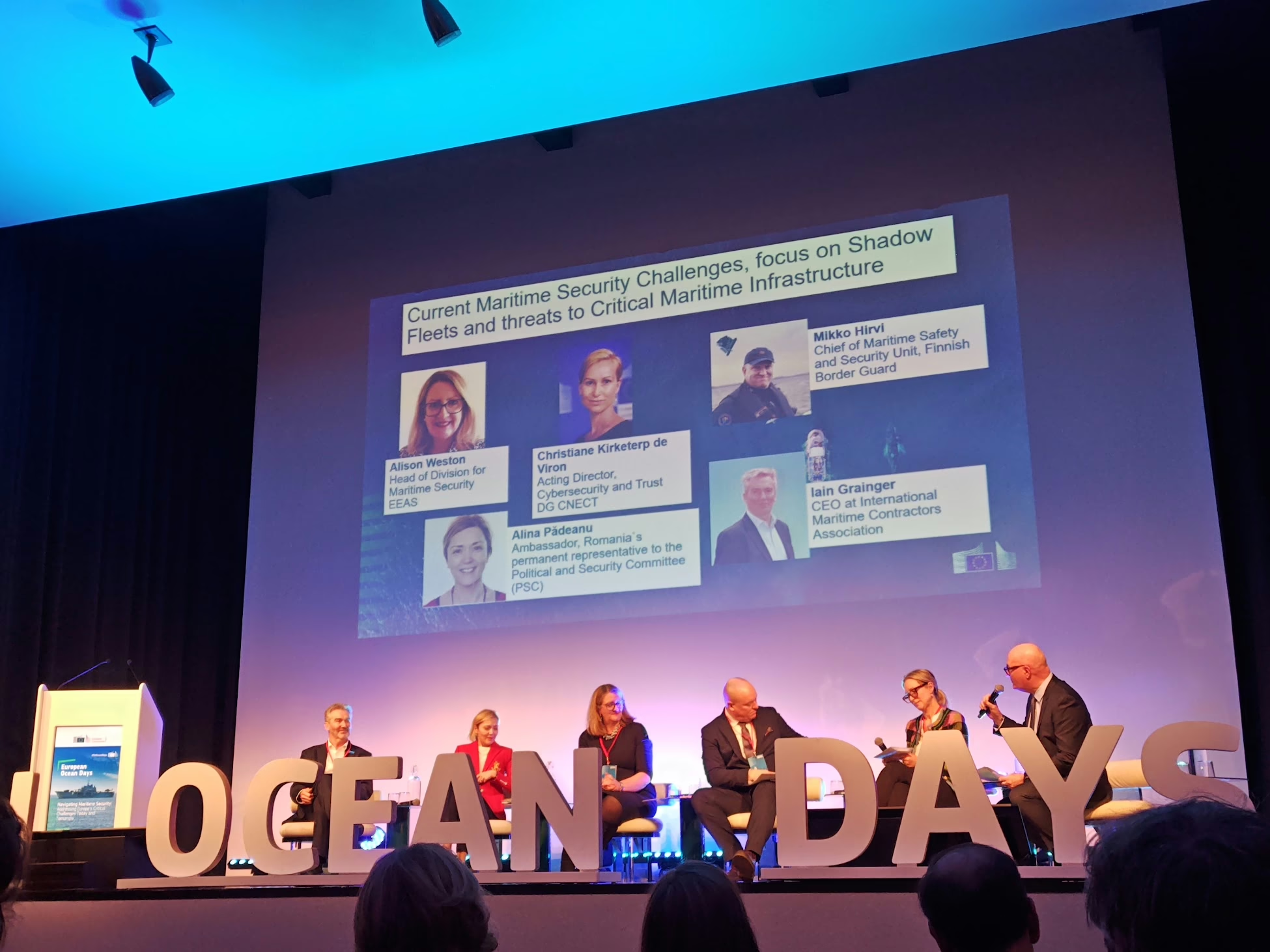
The EU’s 2026 Ocean Days: Ocean Observation meets Maritime Domain Awareness

Held annually in the first week of March the EU Ocean Days are the EU’s spectacle showcasing its work related to the sea. It is, moreover, an opportunity for the EU institutions to engage in stakeholder dialogues.

My visit to the 2026 edition confirmed: the attention to the oceans by the various EU institutions is impressive. Yet, the focus is multi-directional. As we have discussed in a recent book chapter, the flurry of initiatives risks fragmentation. Indeed, the thicket of programs, policies, and strategies is nearly impossible to navigate. It is hard to imagine that anyone has a complete picture.

Particularly encouraging was the emphasis on data collection, sharing, and fusion for ocean health, the blue economy, and maritime security. The announcement of significant funding for the OceanEye initiative was a clear highlight. For the first time the event also featured sessions on maritime security, led by by the dedicated team in DG Mare.

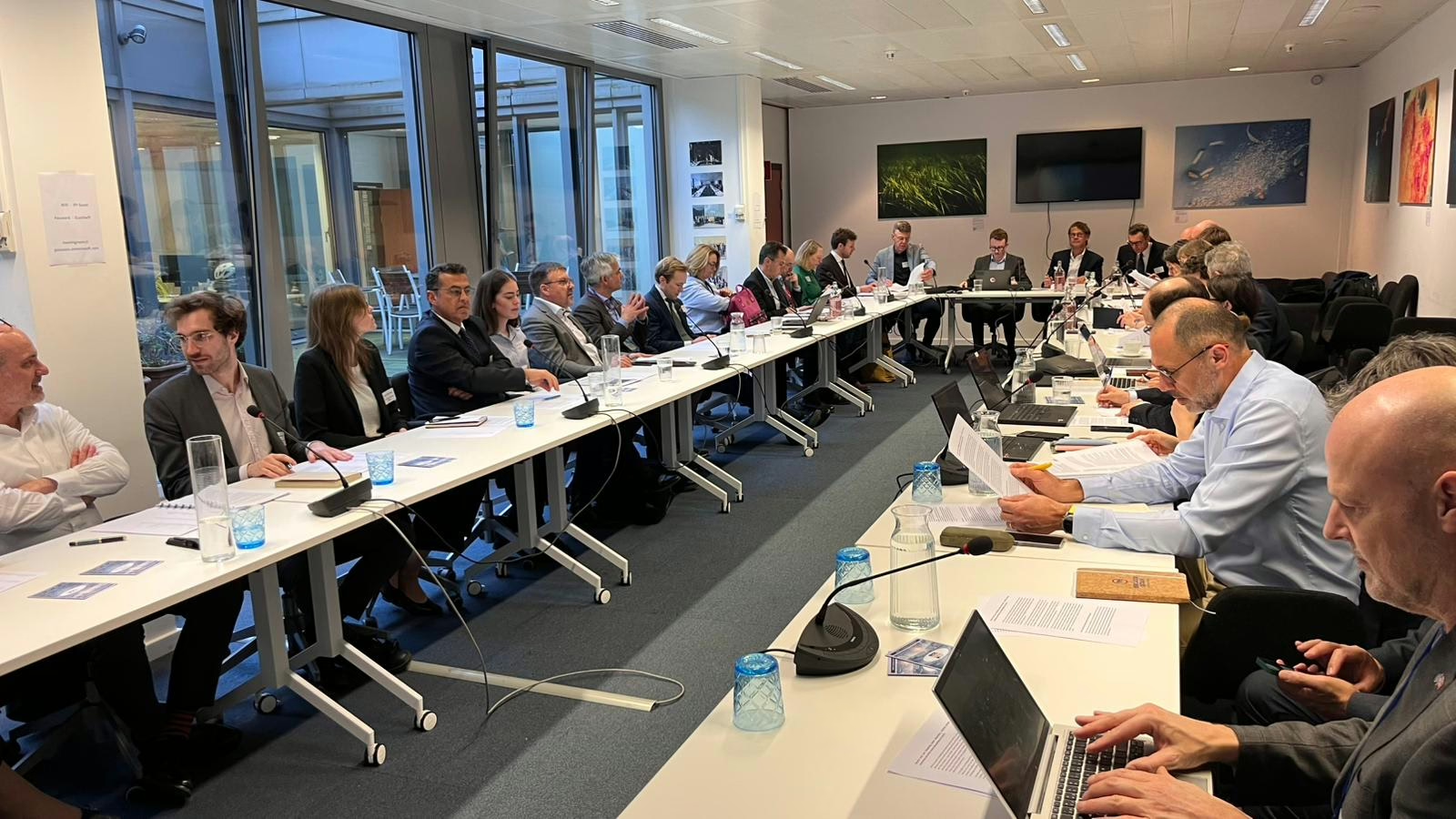
As part of the week, I organized a side event together with Paul Trautendorfer of JPI Oceans. Continuing my work on information sharing, at this stakeholder dialogue event we investigated how the EU’s approach to ocean observation and maritime domain awareness can be better harmonized and streamlined. Our background paper showed that more than 15 platforms are currently funded by the EU.

The discussion highlighted the need for stronger efforts in

  • ocean data meta-governance,
  • greater awareness of the different platforms and their strengths and weaknesses, and
  • better bridges between the scientific, conservation, safety, and defense communities.