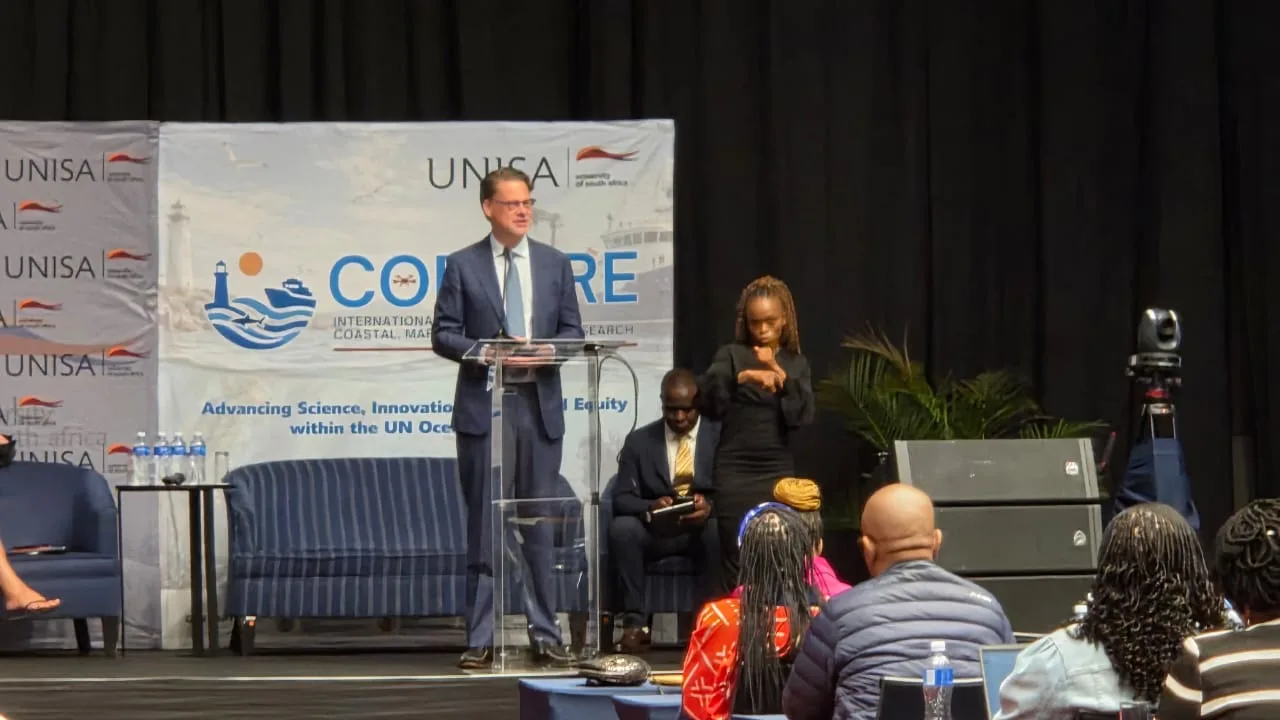
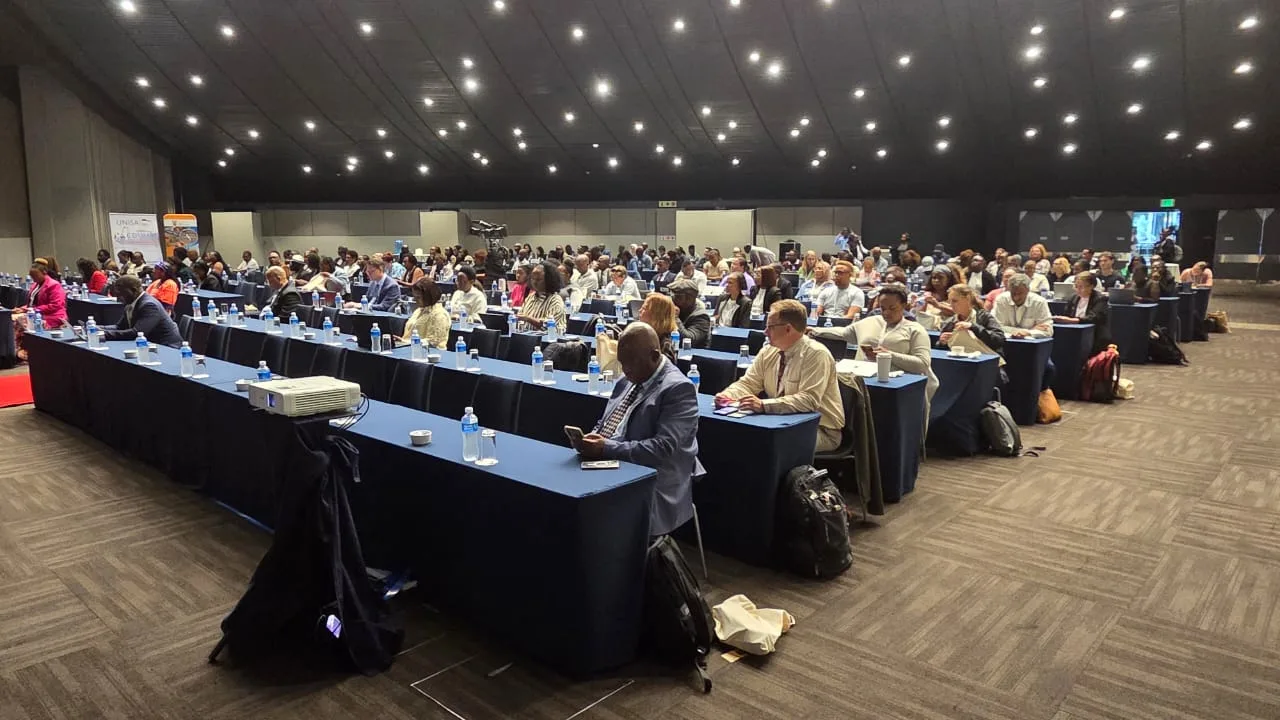
The South African ocean research environment is thriving. A good proof was the first International Conference on Coastal, Marine, and Maritime Research, 27.-30.10.2026, Durban, South Africa organized by UNISA – a transdisciplinary gathering of ocean scholars. At the event I had the pleasure to provide a keynote in the opening panel feeding recent research on global ocean politics into the debate. In my speech I highlighted that:
The ocean is in trouble. The “Blue Acceleration” of shipping, energy, tourism and subsea cables makes us ever more dependent on the sea, and these dependencies create vulnerabilities that are increasingly exploited. War has returned to the sea, grey zone strategies are spreading, and the quadruple planetary crisis hits the ocean hard. The Strait of Hormuz crisis is only the tip of the iceberg. Yet there are glimmers of hope, including the new BBNJ agreement and growing attention at the UN.
Ocean governance is fragmented. Our research identifies four blue paradigms: blue economy, blue health, ocean justice and maritime security. They are advanced by different professional communities and often pull in different directions. Worryingly, maritime security increasingly dominates the debate, and we see a creeping militarization of the maritime domain.
Ocean observation is the backbone of governance, but it is fragmented too. Our recent mapping counted more than 15 platforms and systems in Europe alone. In the Western Indian Ocean, regional science networks, maritime security centres and naval initiatives operate side by side. Better integration means less wasted data and resources, and more promising pathways to action.
Ocean observation can pave the way to maritime peace. Observation is more than a technical task. It is a form of trust and confidence building, and it is most needed when tensions rise. This is why it mattered in the Cold War, when regional sea conventions such as HELCOM emerged. Shared observation also creates accountability: we know who does what, where and when, and we can agree on what the problems are.
That is why maritime peace must be our overarching goal. By this I mean peaceful relations between nations, between people and between humans and all the other species that live and thrive at sea. Protecting the ocean while it is being militarized and fragmented will not work. We need to build peace at sea, and better ocean observation is one of the tools to get there.