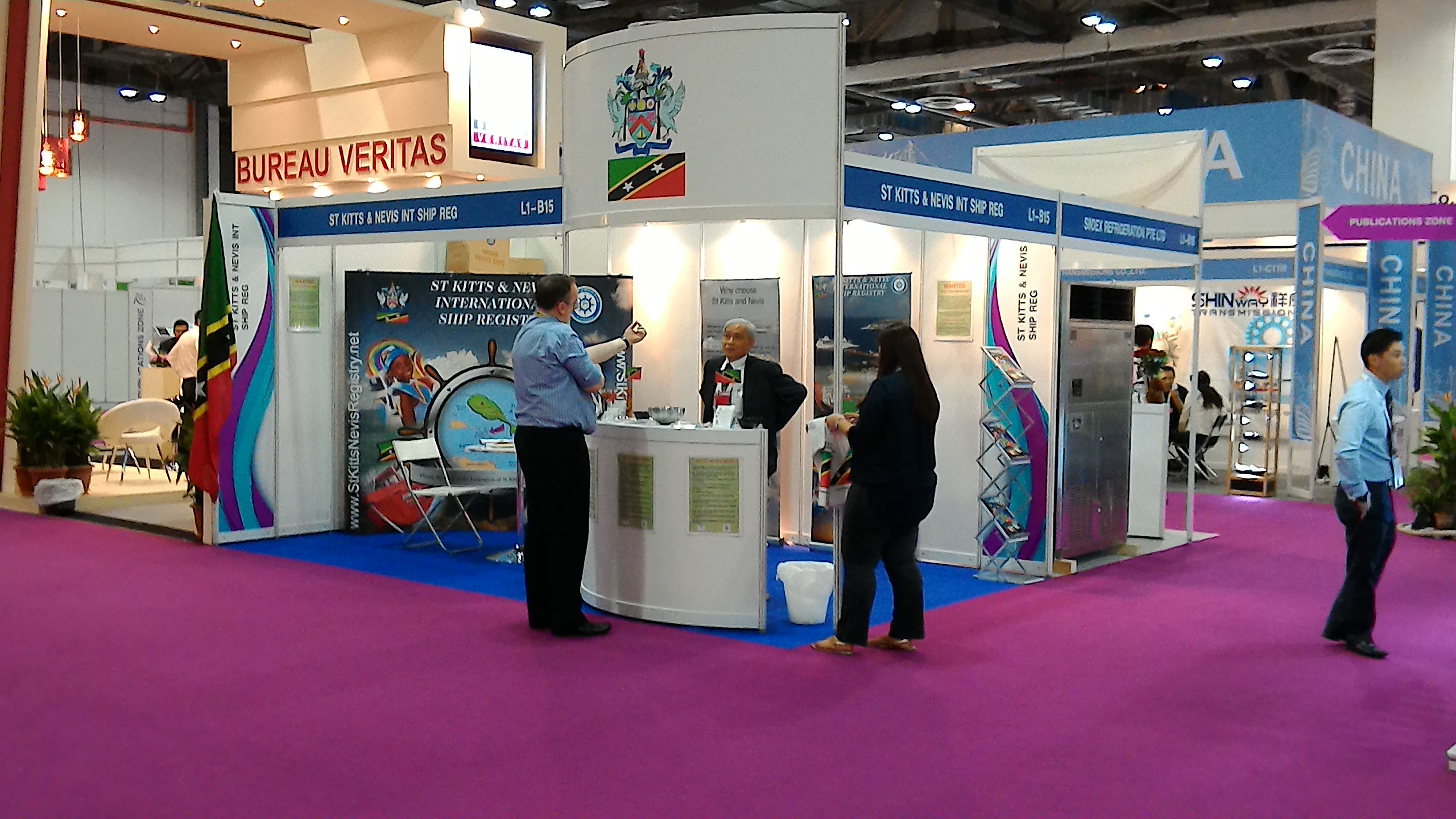
On April 13th I will participate in a Workshop run by DPWorld on the future and state of counter-piracy. The one day event is titled “Mitigating Maritime Piracy through Economic Prosperity and Cross-Sector Innovation: From Africa to South East Asia”. As implied by the title the first core theme is to ask how regions can learn from each other and how cross-regional cooperation in counter-piracy can be facilitated. The second theme is to discuss the relation between economic prosperity and maritime crime, and ask which economic development and innovation programs could be productive to encounter crime. The third theme is to discuss the themes and reach of the upcoming 2015 DP World/UAE counter-piracy conference.
Category Archives: News
Regional Information Sharing III: A visit to the IMB’s Piracy Reporting Center
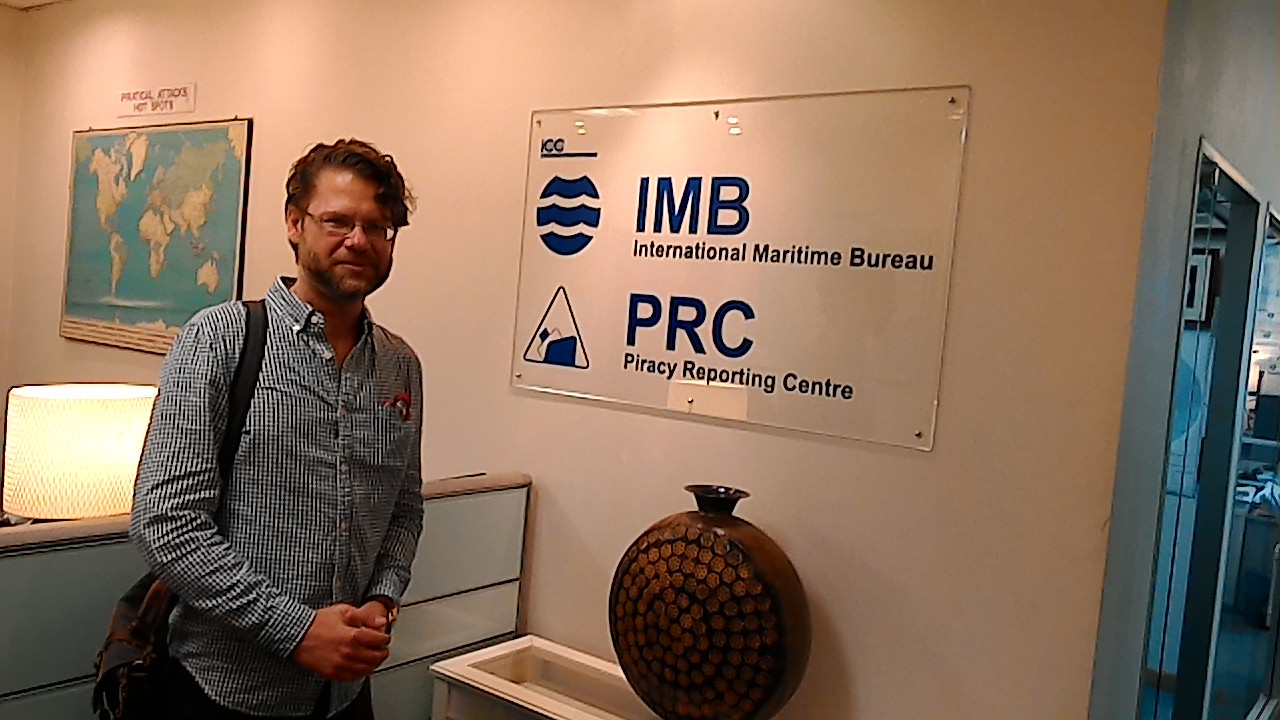
Yesterday, I visited the Piracy Reporting Center (PRC) of the International Maritime Bureau (IMB) at its office in Kuala Lumpur. The IMB works on piracy since its installment in the 1980s, and the PRC is the oldest piracy information sharing center installed as a 24 hours operational center in 1991. From the visit to PRC it became clear how much emphasis this center puts on problemsolving and organizing rapid pragmatic responses by being the first point of contact of the shipping community and getting law enforcement agencies to act. The fact that it is set up as a non-governmental organization has clear benefits, since the PRC can put different pressure on states, e.g. through the media, then governmental centers can do. As a body, which aims at assisting the shipping industry and seafarers primarily, the IMB, is the Red Cross of the Oceans if it comes to piracy.
The visit completed my tour through the regions information sharing centers. I am currently completing a draft paper on the basis of the results which I will present at the Center of International Law of NUS on the 22nd of April. The paper argues to understand the three centers as a functional system in which each performs a different role. I also ask what the lessons from this system for other regions, in particular the Western Indian Ocean are.
An Interview with John Dewey, pre-version published
As part of the project “The return of the theorists” by Richard Ned Lebow, Hidemi Suganami and Peer Schouten I have written together with Peer Schouten a virtual interview with pragmatist thinker John Dewey. In the interview we discuss with Dewey, about his understanding of knowledge production and methods, politics, and language games. The interview is published as Theory Talks interview #100. Please read the full version here.
Does the Mediterranean need a contact group?
In a new comment published on the CIMSEC Blog, I discuss what might be learned from counter-piracy for the current migration crisis in the Mediterranean. I argue that there are at least three major lessons: 1) a Contact Group following the CGPCS model is required that brings all stakeholders together, 2) an operational, information sharing and coordination mechanism that follows the role model of SHADE will improve the response, 3) solutions lie on land and not at sea, hence more efforts will be required to assist the littoral states, notably Lybia.
New Comment forthcoming with MUNPLanet
The website MUNPlanet will be publishing one of my comments on Informal Governance and the Contact Group as part of their “The UN at 70” series. In the comment I address the question of what the meaning of the rise of informal governance are for the UN and what we might want to learn from the CGPCS. Please find the pre-version below.
The Royal Navy’s Hudson Conference IV: What directions for maritime security governance?
Over the last two days, I had the pleasure to attend the fourth installment of the Hudson Conference on Maritime Crime and Development, jointly organized by the Royal Navy and the Global Directions Program of Merton College, Oxford University. Over the years the two day conference has become a major format for the discussion between navies and academics on the challenges that the new maritime security agenda poses (a summary of last years event is available on Piracy-Studies.org).
This year’s edition was on maritime security governance. Bringing together Royal Navy officers, academics, and representatives from various NGO’s and International Organizations the various ways that maritime security is governed were discussed. The focus was on the one side how maritime insecurities and threats, such as piracy, smuggling or fishery crimes rely on informal governance mechanisms which make them particularly difficult to address. On the other side the discussion concerned the governance of responses, ranging from problems of capacity building, to the regulation of private security companies and the shipping industry. In particular the discussion concerned the question of how one can cope with the flag state provisions of UNCLOS and the problem of open registries.
At the conference I presented my latest research based on the field work I am currently doing in Singapore. My presentation was titled “Maritime Domain Awareness – a key enabler? The South East Asian Experience”. In the paper I reflect on the challenges of the Maritime Domain Awareness (MDA) agenda poses and argue against understanding these in purely technical terms. MDA is a form of informal maritime security governance. MDA systems are socio-political-technical assemblages par excellence and as such they imply new forms of security governance. In the paper (available on request, but forthcoming soon) I discuss a range of social and political problems of achieving what MDA promises: to coordinate maritime security responses across states and agencies by developing a shared understanding of what happens at sea and what requires action. As discussed in my recent blogs on the Singaporian MDA centers ISC and IFC, in South East Asia we find an interesting three-center system that might become a role model for other regions in various ways.
The History and Sociology of International Thought: A troublesome relation?
What can the History of Intellectual Thought contribute to International Relations theory? Clarifying the relation between both projects was the objective of the Annual Political Theory Symposium of the Department of Political Science of the National University of Singapore (NUS). The symposium held on the 19th and 20th of March, brought together a range of key thinkers in the History of International Thought. There was some thought provoking insights for the Sociology of International Relations, too. Continue reading
Regional information sharing II: A visit to the ReCAAP ISC
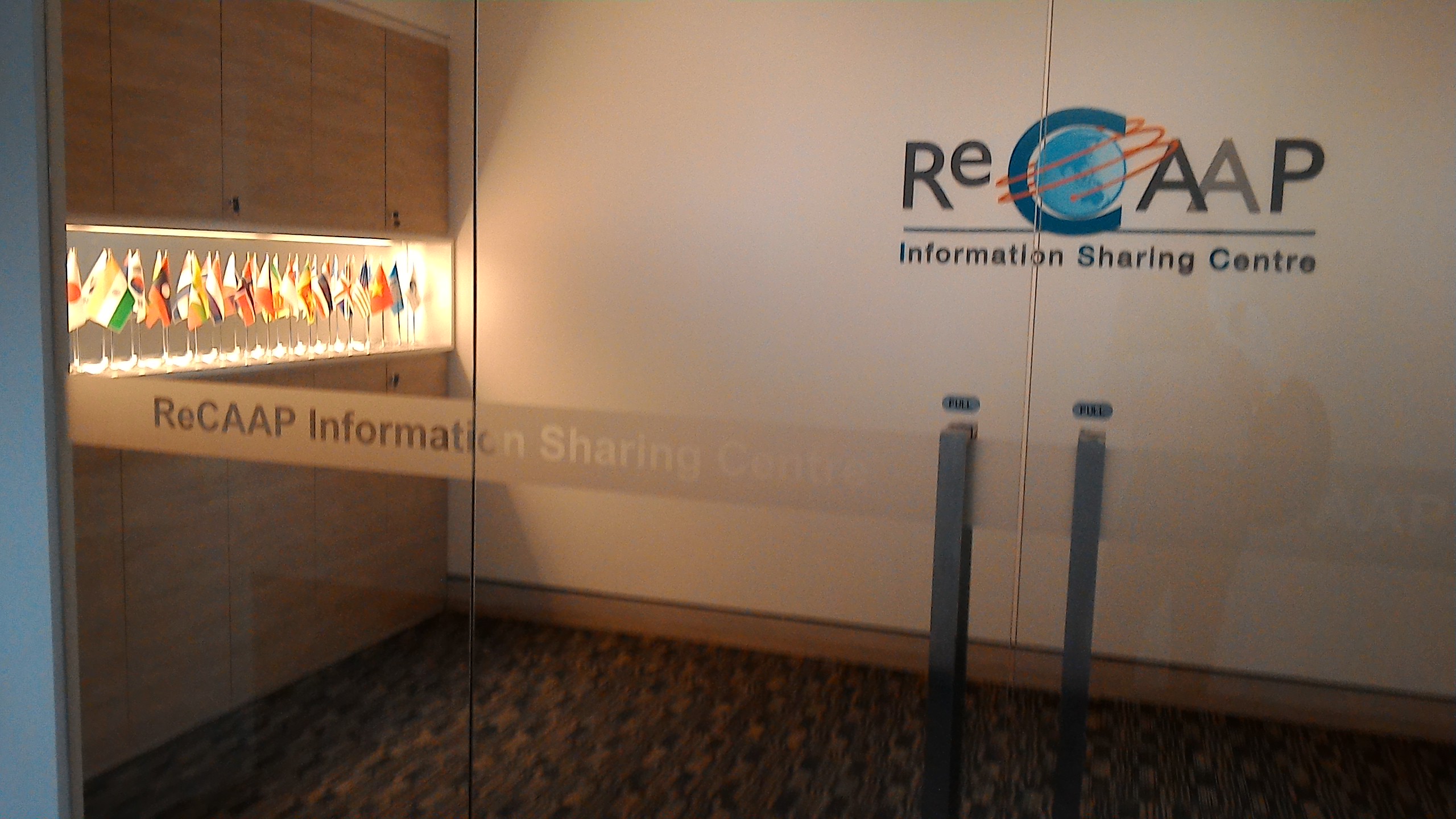
Following my recent visit to the IFC, this week I also had the pleasure to visit the second of the “big three” Information Sharing and Reporting Centres of South East Asia: the Information Sharing Centre of the Regional Cooperation Agreement on Combating Piracy and Armed Robbery (ReCAAP ISC). The ISC was launched in November 2006, and is hence the second oldest centre devoted to piracy (after the Piracy Reporting Centre of the International Maritime Board, IMB PRC). The basis of the centre is a formal multi-lateral (government-to-government) agreement finalized in November 2004 which came into force in 2006. In comparison to IFC, it is hence a more formalized and institutionalized form of cooperation which includes a governing council which steers the work of the ISC. ReCAAP has become a major role model for agreements in other areas, including the 2010 Djibouti Code of Conduct (DCoC) in the Western Indian Ocean and the more recent Yaounde Code of Conduct (YCoC) operating in the Gulf of Guinea. ReCAAP has 19 “Contracting Parties” which includes the East Asian literals, but also a range of European states (Denmark, Netherlands, Norway, UK) and Australia, Japan and the US. Continue reading
Article on Epistemic Practices, the UN and Knowledge Production on Piracy published
My article titled “Making Things Known. Epistemic Practices, the United Nations and the Translation of Piracy” which has been in the pipeline for a while has now been published in International Political Sociology. The article has two core objectives:Firstly, to develop an appropriate theoretical framework on the basis of practice theory by which we can study knowledge production in international relations. My basis is here Karin Knorr Cetina’s practice theory as well as considerations from Actor-Network Theory. Secondly, to provide an initial empirical investigation of different types of knowledge production in the United Nations system. Drawing on the case of how piracy is made known for the UN Security Council I document three types of epistemic practices: the Quantification work of the International Maritime Organization, the detective work of a Monitoring Group, and the net-work of a special adviser. I hope that the article will spur some further discussion on variants of practice theory and what to do with it in IR, as well as how the UN works as a knowledge production organization. It is hence of interest in the debates on IR theory, as well as International Organization.
The article is available as open access in International Political Sociology 9(1).
Contact Group website under new management
As part of my ESRC funded Counter-Piracy Governance Project [ES/K008358/1] we have been selected to take over the management of the website and document archive of the Contact Group on Piracy off the Coast of Somalia (CGPCS). The CGPCS is a global governance mechanism that was created to better coordinate the response to piracy off the coast of Somalia. Over 60 states, international organizations, NGO’s and the transport industry participate in this international organization to develop shared and coordinated responses to piracy. In the project we works with the CGPCS participants since 2014 in a lessons learned exercise. Managing the website and archive is a unique opportunity to study the work of an informal governance mechanism in great detail. We hope to be able to make the archive publicly available as soon as possible. The lessons learned project, the archive and the website of the CGPCS are available at the following address: www.lessonsfrompiracy.net