Christian Bueger


The EU’s 2026 Ocean Days: Ocean Observation meets Maritime Domain Awareness

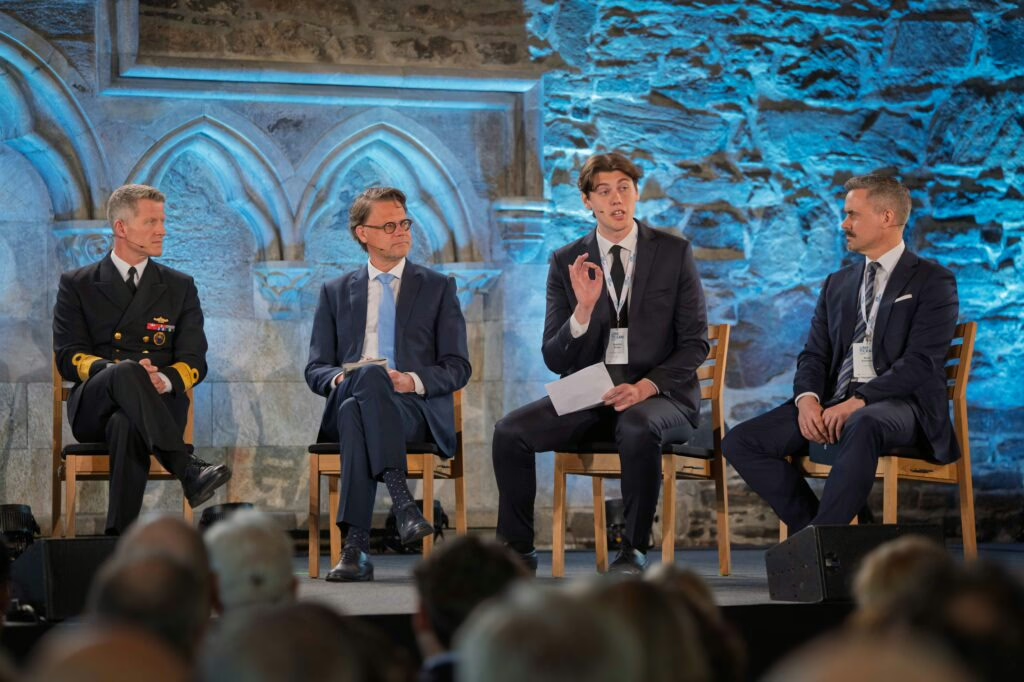
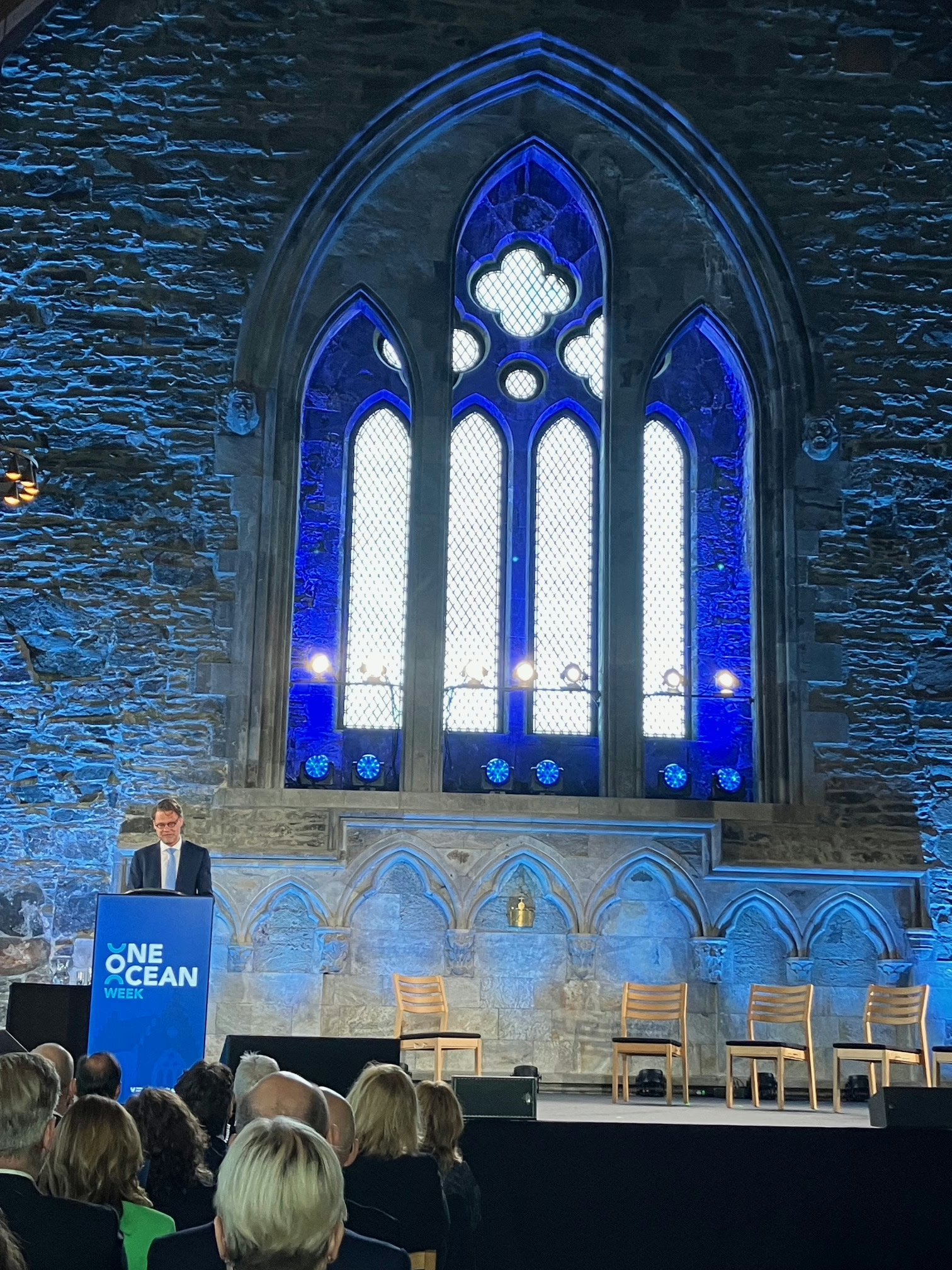
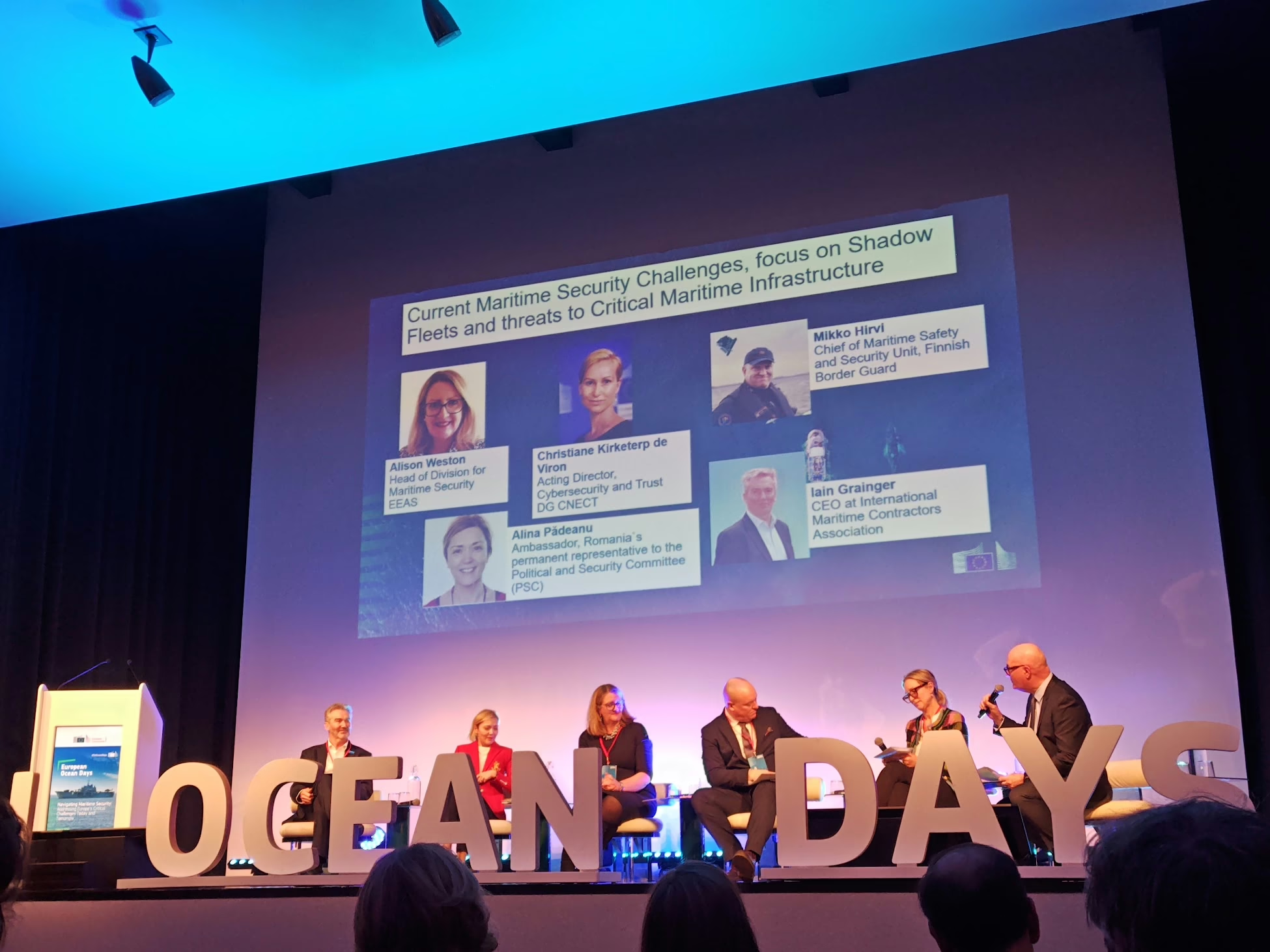
Held annually in the first week of March the EU Ocean Days are the EU’s spectacle showcasing its work related to the sea. It is, moreover, an opportunity for the EU institutions to engage in stakeholder dialogues.

My visit to the 2026 edition confirmed: the attention to the oceans by the various EU institutions is impressive. Yet, the focus is multi-directional. As we have discussed in a recent book chapter, the flurry of initiatives risks fragmentation. Indeed, the thicket of programs, policies, and strategies is nearly impossible to navigate. It is hard to imagine that anyone has a complete picture.

Particularly encouraging was the emphasis on data collection, sharing, and fusion for ocean health, the blue economy, and maritime security. The announcement of significant funding for the OceanEye initiative was a clear highlight. For the first time the event also featured sessions on maritime security, led by by the dedicated team in DG Mare.

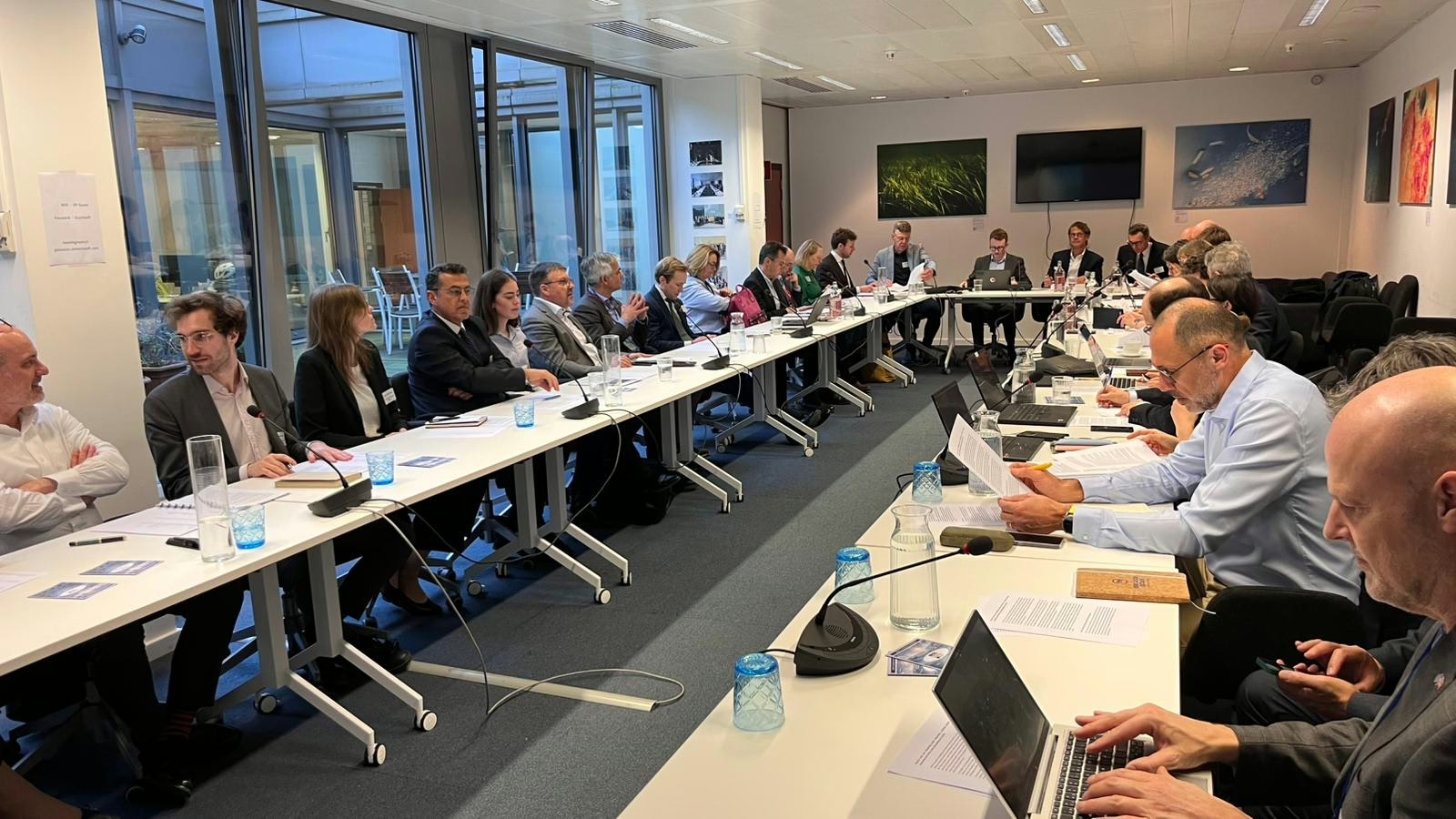
As part of the week, I organized a side event together with Paul Trautendorfer of JPI Oceans. Continuing my work on information sharing, at this stakeholder dialogue event we investigated how the EU’s approach to ocean observation and maritime domain awareness can be better harmonized and streamlined. Our background paper showed that more than 15 platforms are currently funded by the EU.

The discussion highlighted the need for stronger efforts in

  • ocean data meta-governance,
  • greater awareness of the different platforms and their strengths and weaknesses, and
  • better bridges between the scientific, conservation, safety, and defense communities.


New book on global ocean regions

Our new book titled the ‘Politics of Global Ocean Regions’ is now available through Springer. Edited with Elizabeth Mendenhall and Rebecca Strating, the book advances a novel analytical framework for studying the politics of global ocean regions, shedding new light on the complex interactions in ocean spaces such as the Arctic, Indo-Pacific, and Indian Ocean.

We want to show that the oceans are not just vast expanses of blue, but dynamic political spaces shaped by complex regional dynamics. This work is the outcome of a three year research collaboration with leading experts across different ocean regions. It includes chapters by by William Waqavakatoga, Joanne Wallis, Samuel Bashfield, Leandra R. Gonçalves, Ana Flávia Barros-Platiau, Carlos Henrique Tomé, Carina Costa de Oliveira, and Andreas Østhagen, as well as by the three editors.

Written for students, researchers, and analysts interested in regionalism and ocean governance, this comprehensive study:

  • Presents a novel framework for analyzing ocean regions as political spaces
  • Examines the emergence, organization, and effects of global ocean regions
  • Demonstrates the importance and complexity of regional maritime politics
  • Provides essential insights for understanding the governance of global commons

🔗 Available now: https://link.springer.com/book/10.1007/978-3-031-88984-4 (Contact me, if you cannot access via your institution)

I hope this work will serve as an essential resource for understanding how diverse and complex regional maritime politics shape our world, providing a valuable framework to guide future research in this critical field.


Searching for a new vision of ocean politics – lecture at University of Malta

The oceans have gained much world political attention. Yet, ocean debates continue to be structured by three visions – the oceans as closed, free or global commons. In a talk I will be giving at the Department of International Relations, University of Malta, I argue why these visions are limited. We have to ponder about alternatives. I outlines how thinking with ‘infrastructures’ can help us to go beyond territory, freedom, state-centrism and formal law, enables paying attention to technology and economics, and capturing global ocean politics in the age of the anthropocene.

The talk titled Ocean Infrastructures – Searching for a new vision for global ocean politics, takes place on November, 23rd (12.00-13.30), Boardroom 212, Old Humanities Building, Department of International Relations, Faculty of Arts.