Christian Bueger


Maritime security in Southeast Asia: Celebrating the 20th anniversary of ReCAAP

Southeast Asia has long been a region of maritime security innovation. A key driver was the maritime piracy crisis in the late 2000s.

A key regional governance mechanism originating from that time is the Regional Cooperation Agreement on Combating Piracy and Armed Robbery against Ships in Asia (ReCAAP) and its associated Information Sharing Centre (ISC). ReCAAP is one of the few legally binding and well institutionalized regional maritime security frameworks that has served as a role model for arrangements such as the Djibouti Code of Conduct in the Western Indian Ocean and the Yaoundé Code of Conduct in the Gulf of Guinea.
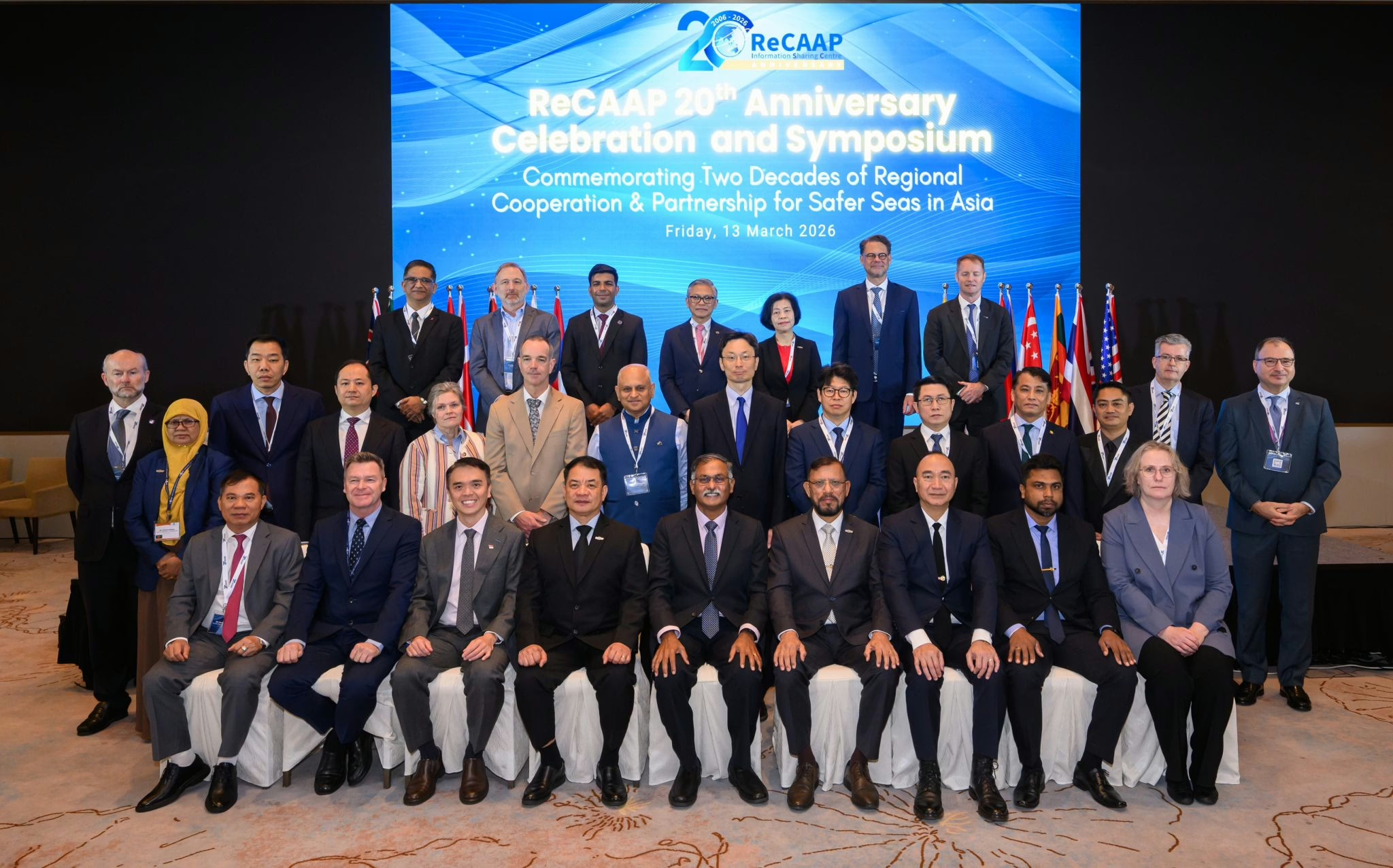
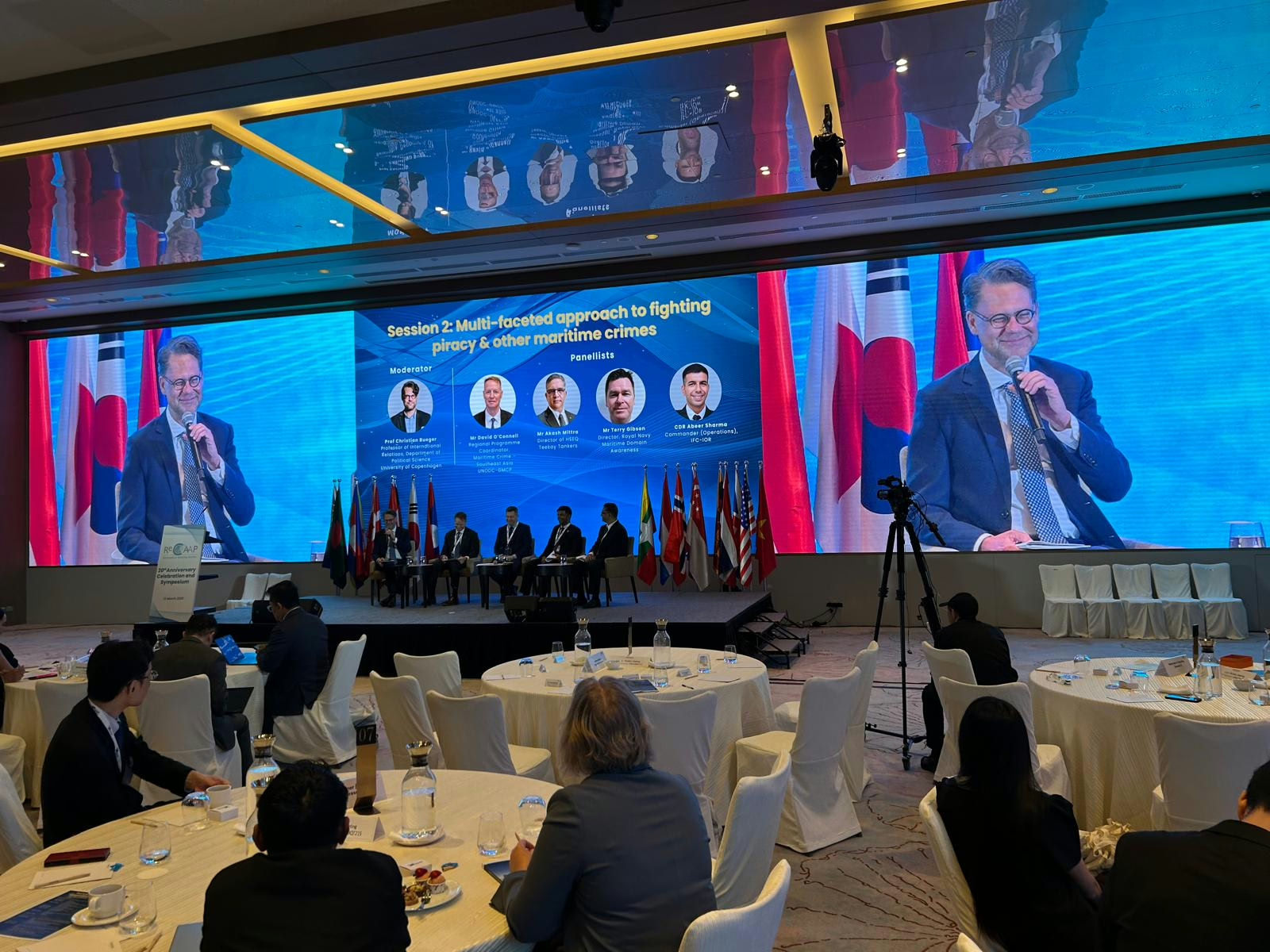
On Friday, 13.3., I had the pleasure to participate in the symposium celebrating the 20th anniversary of ReCAAP as a panel moderator. This provided a great opportunity to revisit a comprehensive study on maritime domain awareness in Southeast Asia that I conducted in 2015. Most of the observations continue to be valid:

ReCAAP’s main function is to provide a clearing house for piracy-related information and to analyze available incident data. It’s key strength is to ensure high level of awareness and understanding of piracy in the region, even if threat levels are low. The centre’s work is moreover important in capacity building and the exchange of lessons across global ocean regions.


Maritime Ideaslab in Copenhagen

As part of an ongoing collaboration between the University of Sydney and the University of Copenhagen, I organised together with the Center for Global Criminology an ideaslab on maritime security on the 27th of June. Titled “Insecurity, Crime and Cooperation at Sea”: New Perspectives on Maritime Security” the goal of the day was to explore different ideas from international relations, security studies, and anthropology of how our thinking changes if we initiate inquiry from the sea and not the land.

The day provided an opportunity to exchange views on why and how the maritime is a site and a view point from which to explore the social and political differently. In the background was the observation that the majority of social science disciplines have focused on the land and rather ignored the sea. What has been called “sea blindness”, however, is gradually changing. Increasingly the sea is not taken as an empty void, but understood as a rich space filled with meaning, actions and life. Emerging research challenges the land/sea dichotomy and is interested in connectivity, flows and chokepoints, piracy and other forms of maritime crime, or ports and maritime infrastructures. The six presentations of the day picked up these themes respectively.

Continue reading