Christian Bueger


Maritime security engagements in Singapore

What are the key maritime security centers of the world? Singapore is clearly one of them. Institutions such as the Navy’s Information Fusion Centre (IFC) or the RSIS think tank‘s maritime security programme are major hubs for the international debate.

Over the last few days I was back in the city for discussions on the Strait of Hormuz crisis and for IFC’s annual flagship capacity-building programme, the Regional Maritime Security Practitioners Programme (RMPP). It was illuminating to discuss what the current Strait of Hormuz crisis means for Southeast Asia, for Singapore’s shipping industry, and for maritime security more broadly.

On one side, the growing shift toward grey-zone tactics at sea, the decline of traditional naval hegemony, and the new politicisation of strategic waterways are unsettling trends that demand sharper analytical tools. On the other side, the shipping industry remains remarkably resilient, and new thinking on maritime security and peace is gaining real momentum.
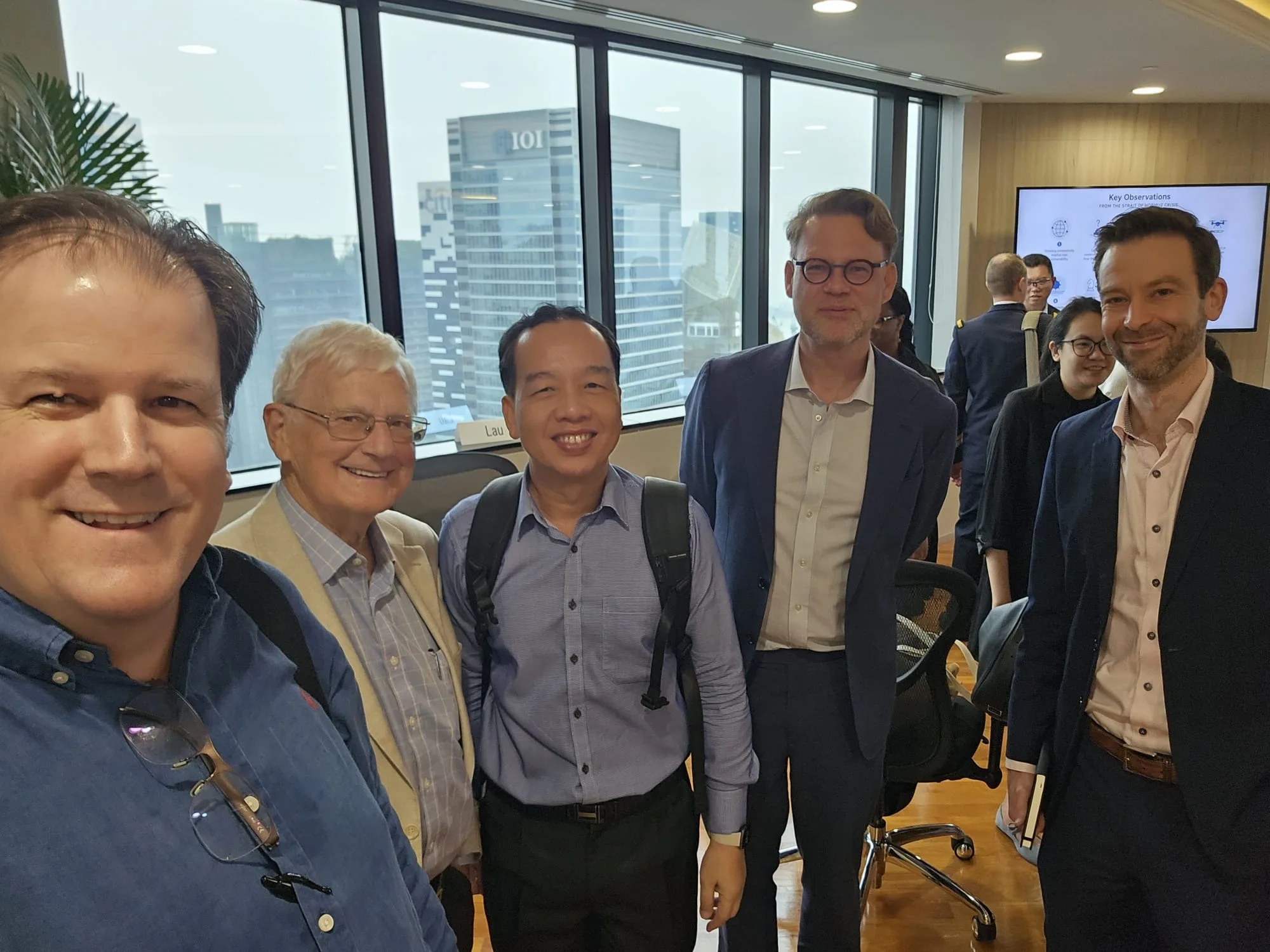
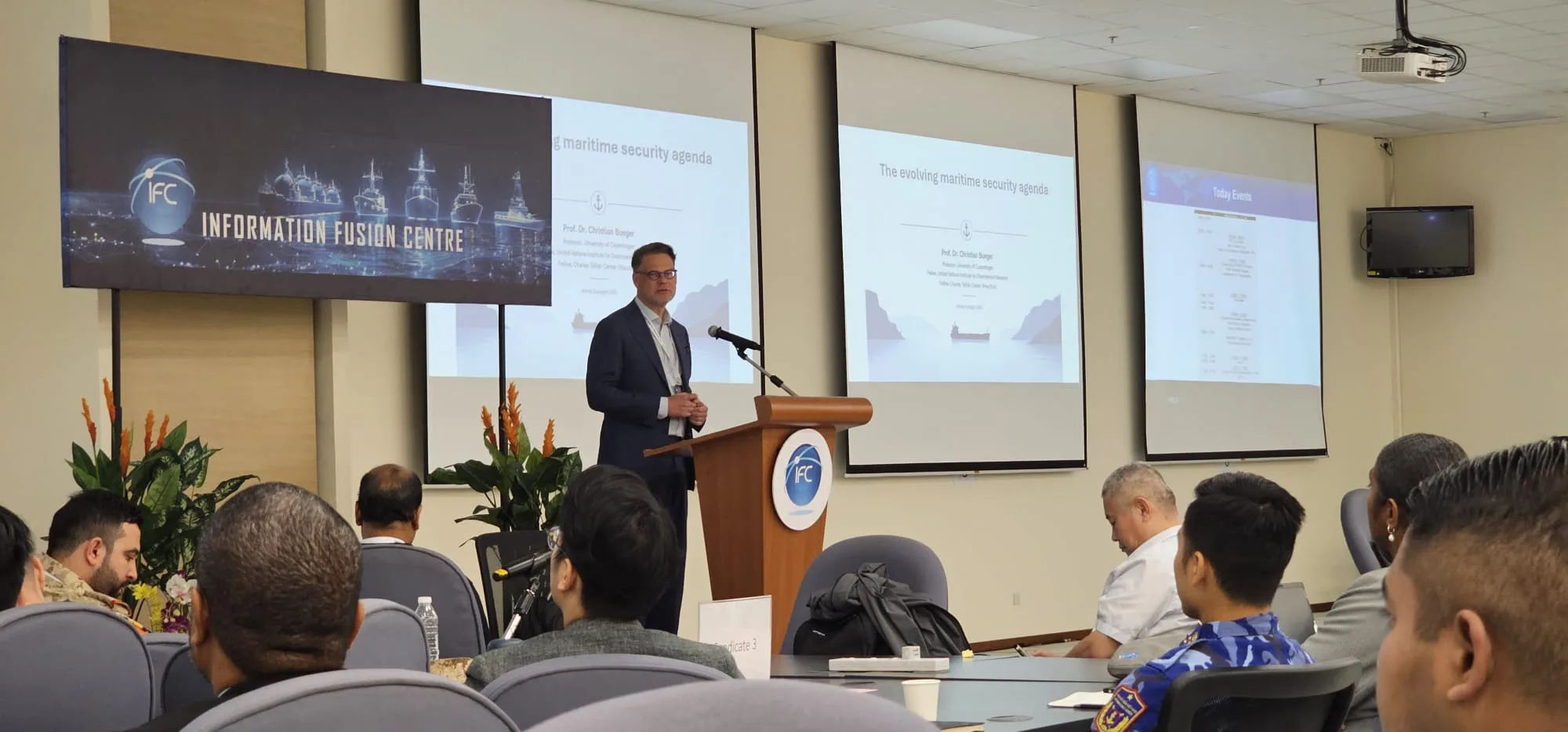
🙏 Big thanks to the Danish Embassy and Jakob Brix Tange for hosting a dinner with shipping industry representatives, to Darshana Mozinder Baruah and International Institute for Strategic Studies for organizing an afternoon seminar on the Hormuz crisis, and to RSIS and IFC for flying me in and giving me the chance to discuss maritime security trends with the RMPP participants.

It was also a privilege to witness the 50th anniversary of IFC’s Shared Awareness Meeting, one of Southeast Asia’s premier exchanges on the state of maritime security and what it means for industry. Digital interference — the jamming and spoofing of navigational signals — was the biggest concern raised this time.

Also wonderful to catch up with so many old friends in the maritime field. I already look forward to return to Singapore next year.

1 Comment

The IFC at ten: Attending the MARISX Information Sharing Exercise in Singapore

Singapore is host to one of the most successful initiatives for sharing information and developing maritime domain awareness on a regional level. The Information Fusion Centre (known as IFC) operated by the Singaporean navy has become a global template for how to improve the flow of maritime information, conduct solid analysis of activities and trends at sea, but also to react rapidly to any maritime incident across borders and jurisdictions.

On the 14th of May the IFC celebrated its 10th anniversary. At the celebration it also launched the new information sharing platform of the centre. The celebration was part of the annual exercise MARISX.

I had the opportunity to attend the event as an observer. Following my earlier visits to the IFC in 2018 and 2015 (see my article on the IFC here), I could for the first time see the exercise in action. MARISX brought together participants from ASEAN navies and coastguards, and various international partners, including Australia, China, Germany, India, Seychelles, the UK or the US. For three days participants had the opportunity to try out the brand new IFC Real-time Information-sharing System (IRIS) to address real life scenarios, such as illegal fishing, illegal migration or piracy incidents. The participants also discussed how such incidents can be better managed jointly using the platform. A number of national operational centers (OPCENs) from different countries participated remotely in the exercise. Also representatives from the shipping industry, including the Singapore Shipping Association or Intertanko, as well as international organisations such as Interpol and UNODC contributed to the event.

Continue reading →