The UN Security Council will continue its strategic debate on maritime security next week. Bahrain is chairing an open debate on the topic. Much of the discussion is likely to be overshadowed by the tricky situation in the Strait of Hormuz.
However, there are broader issues at stake: How can the UN engage with maritime security and peace in a more sustained and strategic manner? In a new contribution for UNIDIR’s maritime security workstream I show that the UN faces gaps in coordination and analysis.
I propose reform steps, which are modest in ambition, but significant in impact. The UN’s approach would be stronger through:
The first UN Security Council resolution (2817) on the current situation in the Strait of Hormuz was historic: 135 states sponsored the document calling for an end to attacks on shipping. Ten days of intense negotiations later, the Council is expected to vote on a follow-up resolution today.
According to the Security Council Report, the resolution calls on states “to coordinate efforts, defensive in nature, commensurate to the circumstances, to contribute to ensuring the safety and security of navigation across the Strait of Hormuz, including through the escort of merchant and commercial vessels, and to deter attempts to close, obstruct, or otherwise interfere with international navigation”.
That means that the Council will not explicitly authorize the use of force, as some states called for. Its focus on defensive measures is useful, as it does not risk escalation.
The resolution will serve as a solid foundation for a future arrangement for governing the strait, which can be put in place once a ceasefire is agreed. This will be led by the 40-nation-plus coalition of states that have already agreed to contribute to the protection of shipping in the region.
A contact group will likely be the best format to organize the coalition, to enhance military coordination, coordination with the shipping industry, and to harmonize legal understandings.
As I have argued in a recent commentary for EUobserver, the EU could play a leading role, given its experience with organizing multilateral naval operations, and the strong information-sharing infrastructure it has in place.
All of this only can be activated once hostilities end. It’s important to have solid planning already now.
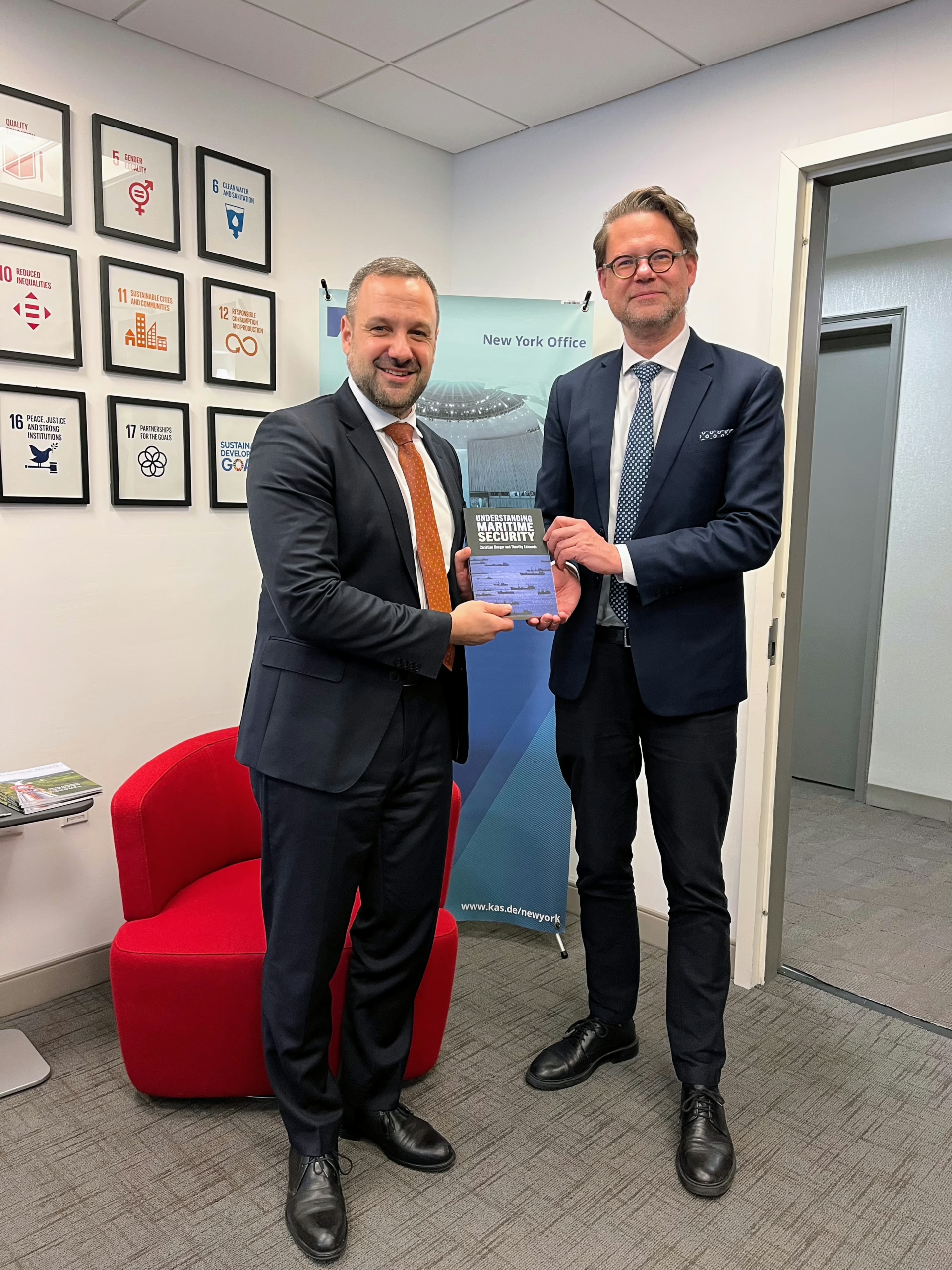
Back in New York for a discussion on the UN’s role in global maritime security.
In 2025, the UN Security Council has held two general high level meetings on maritime security as well as an Arria formula meeting on seafarers. Additionally, dozens of smaller informal meetings were held in New York. The current momentum and the strong consensus of nations to improve maritime security responses, expressed at these events, is unprecedented. It reflects the rapidly evolving maritime challenges, including armed attacks on shipping, substandard shipping to evade sanctions, persistent piracy and smuggling.
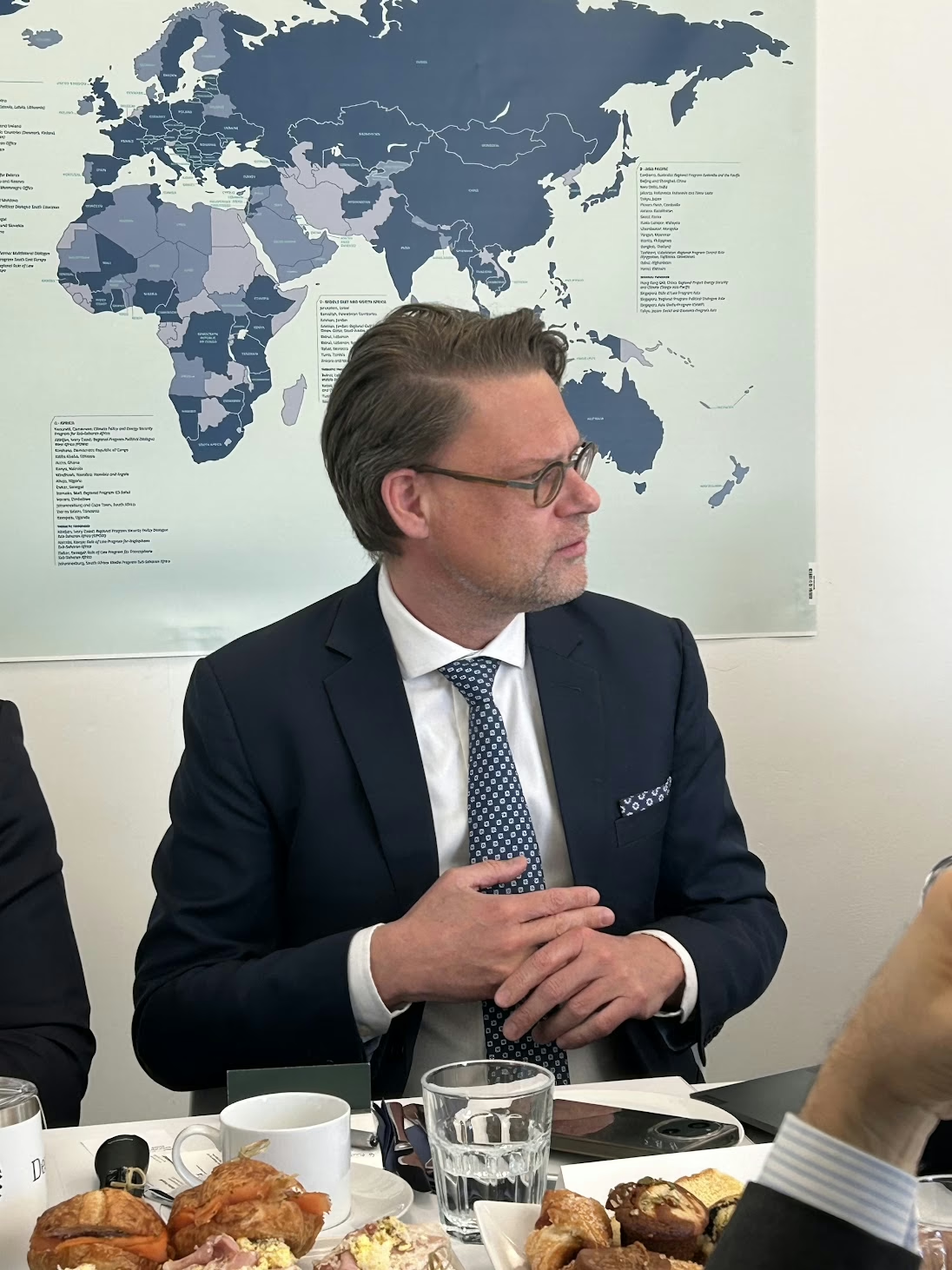
At an event co-organized by the Konrad Adenauer Foundation (KAS) New York Office and Greece, we discussed what the UN could do better and more effectively. In my intervention, I laid out the challenges:
The oceanic disconnect: Discussions on blue economy and marine conservation, e.g. within the framework of the UN Ocean Conference, are largely disconnected from maritime security debate.
Too many agencies, too little coordination. As identified in our 2024 UNIDIR report, a high number of UN agencies address maritime security through different mandates, with no coordination processes between them.
Capacity building traps. We lack solid understanding of who is training whom in what, and what types of capacity building are lacking.
Data gaps: We are far from a comprehensive global picture of maritime security incidents, trends and patterns. While maritime domain awareness centers provide this on a regional level, no one ensures global data.
Analytical void: There is too little analytical expertise within the UN to ensure that we make sense of patterns and trends, act preventively, and identify the norm deficits of emerging issues.
Following up on my intervention in the Council in May this year, I called for an office dedicated to maritime security. This would act as a clearing house and develop an annual report on the state of maritime security for the Council and General Assembly to consider. It could ensure sustainability, reduce waste of resources, and enhance efficiency.
Other speakers highlighted the need to mainstream maritime security across UN activities, including, e.g. in peace operations, stressed the importance of inter-regional cooperation, and flagged the need for preventive action. Newly emerging challenges were also discussed, including nuclear-powered ships and floating sea mines.
In 2026, countries with strong maritime interest, including Bahrain, Colombia and Liberia, will join the Council. This is likely to generate further momentum for maritime security. Whether the P5—notably Russia and China—will agree to a Council resolution that paves the way to a more structured and sustainable approach remains to be seen.
🔊 The incoming Council membership – featuring Greece (controlling 17% of global maritime capacity), Denmark (home to Maersk), Panama (world’s largest flag state), Pakistan (regional naval power), and Somalia (maritime security success story) – creates a unique concentration of maritime expertise alongside the permanent members.
💡 This “de facto Maritime Security Council” arrives at a critical moment. From attacks on commercial shipping to cybersecurity threats and environmental challenges, maritime security threats are evolving at an unprecedented pace. No nation can ensure maritime security alone.
Key questions for the Council to discuss: 🔎 Establishing a dedicated maritime security mechanism within the UN system 🔎 Improving frameworks for information sharing and protecting critical maritime infrastructure 🔎 Addressing and coordinating responses to environmental threats in maritime domains
➡️ Read my full analysis on how this unique Council composition could reshape global maritime security governance here.