Christian Bueger


Strategic Foresight Diplomacy in Action – The EU-Indonesia dialogue.

It was a pleasure to contribute to an innovative EU-Indonesia track 1.5 dialogue this week.

Track 1.5 dialogues are a conventional tool in diplomacy. In Southeast Asia they are even one of the main modes of diplomatic negotiations – known as the ‘ASEAN way’. Mixing participants from ministries of foreign affairs, governmental research organizations and independent think tanks, their primarily objective is usually trust and confidence building, developing interpersonal networks, but also epistemic alignments: open exchanges on problem interpretation, current and planned policies, recent developments and plans. Chatham house rules are usually applied and participants are asked to make frank remarks or ask critical questions, which could otherwise violate diplomatic conventions. If and how such events are effective and trickle down to formal track 1.0 diplomatic negotiations is often debated, but in the end very difficult to measure.

This week I participated in the EU-Indonesia track 1.5 dialogue. Mainly concerned about the implications of the recent comprehensive trade treaty, the event was noteworthy as the EU tried out a new format: strategic foresight. In what might be described as “foresight diplomacy”, the focus of the event was on exchanges on foresight expertise.


Strategic foresight is a planning approach that has become increasingly popular in the defense sector, economic policy making, but also the commercial sector. As a methodology it is focused on the management of risk by identifying mega trends and scenarios. Contrary to forecasting, multiple futures are anticipated and evaluated for their plausibility in participative processes. The goal of planning is preparedness and resilience. Both the OECD and NATO have developed important guidelines for carrying out such analyses and the EU and Indonesia, but also many others, have developed foresight capacities in their diplomatic services.

Foresight diplomacy is focused on the systematic exchange not only of experience, but also the outcomes of foresight exercises. Comparisons between meta trends, scenarios and resulting gaps and planning priorities serve as the basis for not only epistemic alignment, but also identifying common interests and collective action space.

According to the organizers the event that I attended was one of the first in which the EU, led by the foresight unit in the European External Action Service and its partner – Forward Global –, tested this approach. While there’s a risk that foresight diplomacy dialogues become methods driven and technocratic, they might be extremely useful to overcome the short-termism and news focus that too often prevails at track 1.5 dialogues. I look forward to following how the EU continues to advance this innovative form of diplomacy.


Legal expert meeting in Brussels

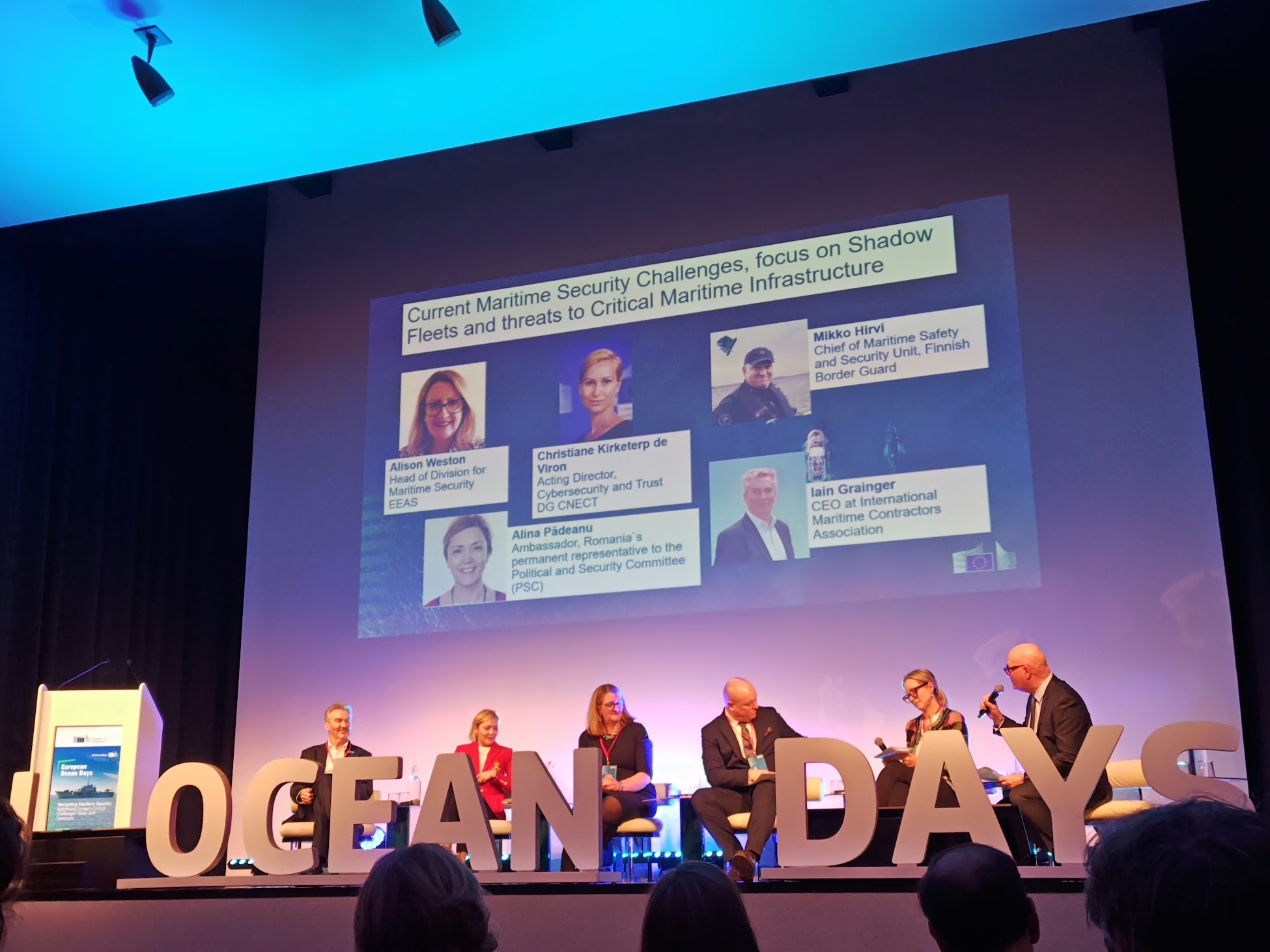
The number of maritime accidents and dangerous situations in European seas continues to rise dramatically. Damage to underwater infrastructure, substandard vessels in distress, and unusual ship accidents indicate growing instability in the European maritime space.

It remains uncertain which of these incidents can be linked to deliberate acts, or whether some are state-sponsored. Regardless of whether regional seas such as the Baltic are now in the ‘grey zone’ between war and peace, Europe needs to better protect its maritime activities, installations, and the environment.

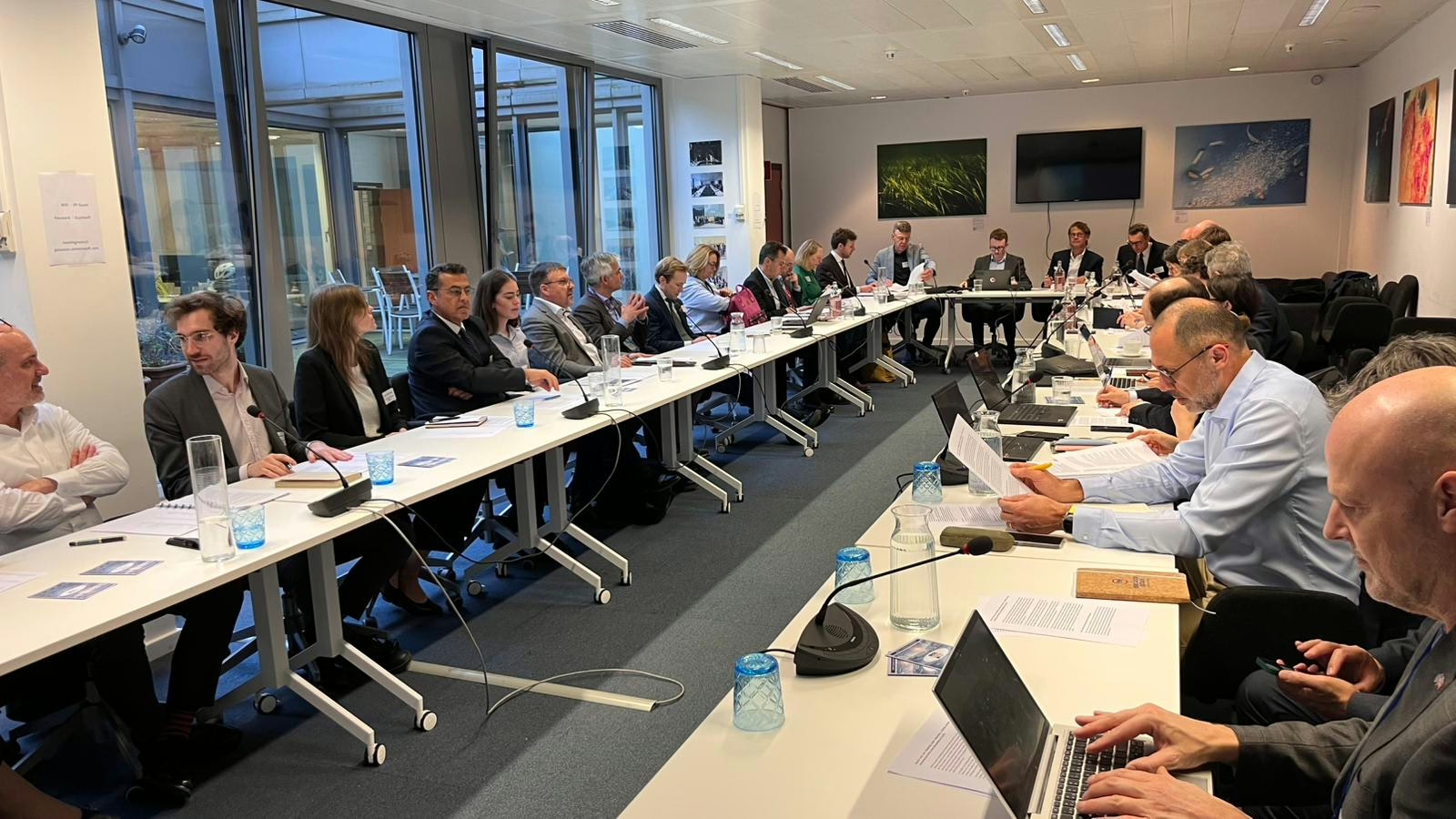
On Friday, 21.3., I had the pleasure to speak at a workshop in Brussels organized by the European External Action Service – the EU’s diplomatic service. The workshop convened Law of the Sea and maritime security experts from member states and the Commission, with the key objective of identifying legal options and new actions to make the EU’s waters safer.

What are the legal foundations to improve law enforcement to prevent accidents, conduct thorough investigations, and prosecute perpetrators? The EU does not have a unified voice when it comes to how the UN Convention on the Law of the Sea and other conventions should be interpreted.

For instance, when and where can a ship be stopped and boarded without waiting for flag state permission? What are the limits of ‘innocent passage’ – the key concept to ensure freedom of navigation in the Law of the Sea?

The EU will continue to grapple with these questions, but it is important that an organized discourse is now underway. Having the right laws in place is equally important as developing the right technology or strengthening operational coordination.


Talk at University of Bologna

On May 4th I am giving a guest lecture at the Department of Political Science at the University of Bologna. In the lecture I will review the European Union’s approach to maritime security based on a forthcoming paper co-authored with Tim Edmunds. The paper draws on our research on maritime security strategy as well as a talk on the EU’s maritime security strategy I gave last year at the EU Military Committee. Further information and location here.


What is the state of the EU’s maritime security strategy?

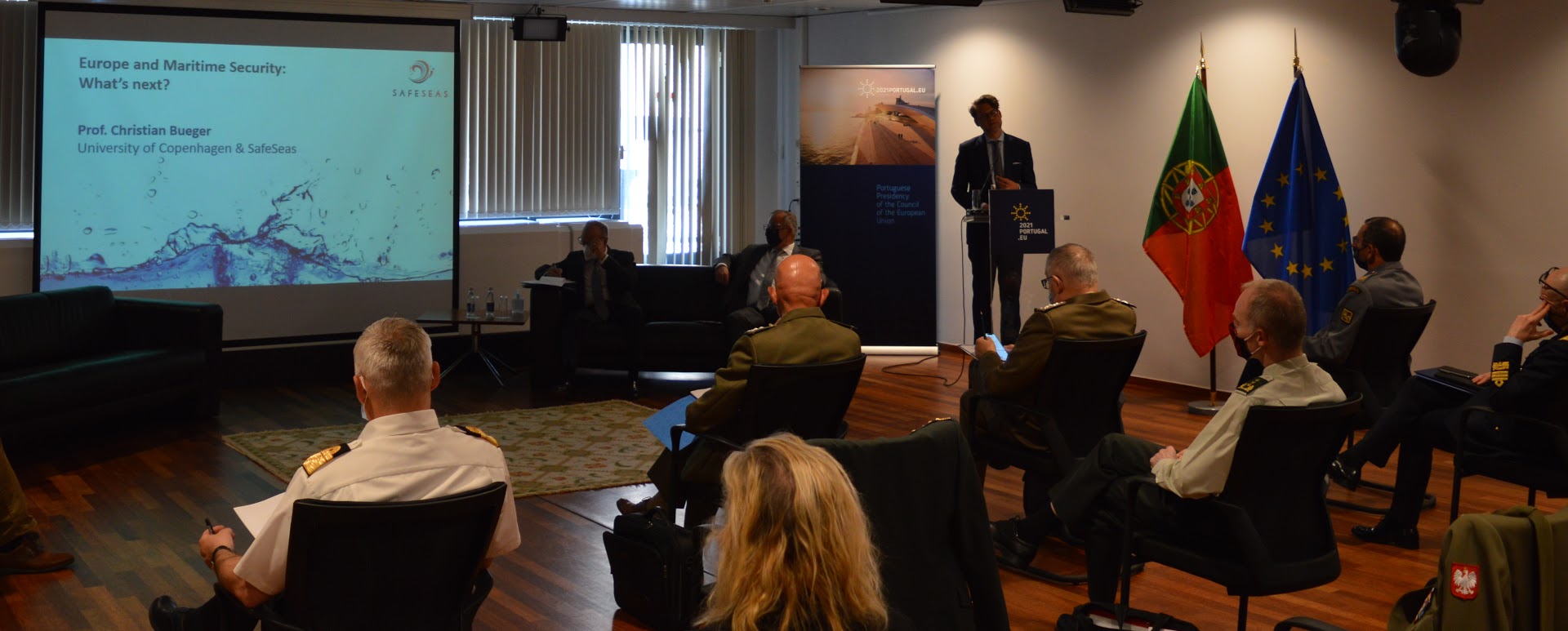
The Portuguese presidency of the Council of the EU has made quite some efforts to lift maritime security higher on the agenda of the EU. To reflect on the state of EU maritime security provision, Portugal organized a mini away day of the EU Military Committee on 2 June 2021.

I had the pleasure to speak at the event alongside the keynote speaker Mr Kitack Lim, Secretary General of the International Maritime Organization, and the Portuguese Special Representative for Maritime Security in the Gulf of Guinea.

In my talk I reviewed the current strategy choices of the EU. I highlighted a number of current challenges, which includes in what kind of command structures the EU operates abroad to address piracy and other blue crimes, the relationship to NATO’s work on maritime security, and the issues linked to the Brexit process.

I also argued for the need to pay more attention to arising matters, including the environmental security agenda at sea, the consequences of climate change, and the importance of subsea data cables.

I concluded in suggesting to revisit the EU Maritime Security Strategy and calling for an open dialogue with NATO on the matter.